Yes, MESA has helped many couples overcome certain types of male infertility, especially when sperm cannot be released naturally, increasing their chances of having a child through assisted reproduction.
Blog
MESA Full Form: Understanding Microsurgical Epididymal Sperm Aspiration in Fertility Treatment
Many couples imagine having a child someday. For most people it happens naturally, but sometimes it doesn’t go as planned. Fertility problems are actually more common than people think, and in quite a few cases the issue may be related to sperm.
Now, when sperm cannot come out naturally in semen, doctors may suggest special medical procedures to help retrieve sperm directly from the male reproductive system. One such procedure is called MESA.
A lot of people search online for the MESA full form because the term sounds complicated at first. But once you understand what it means and how it works, it actually becomes much easier to grasp.
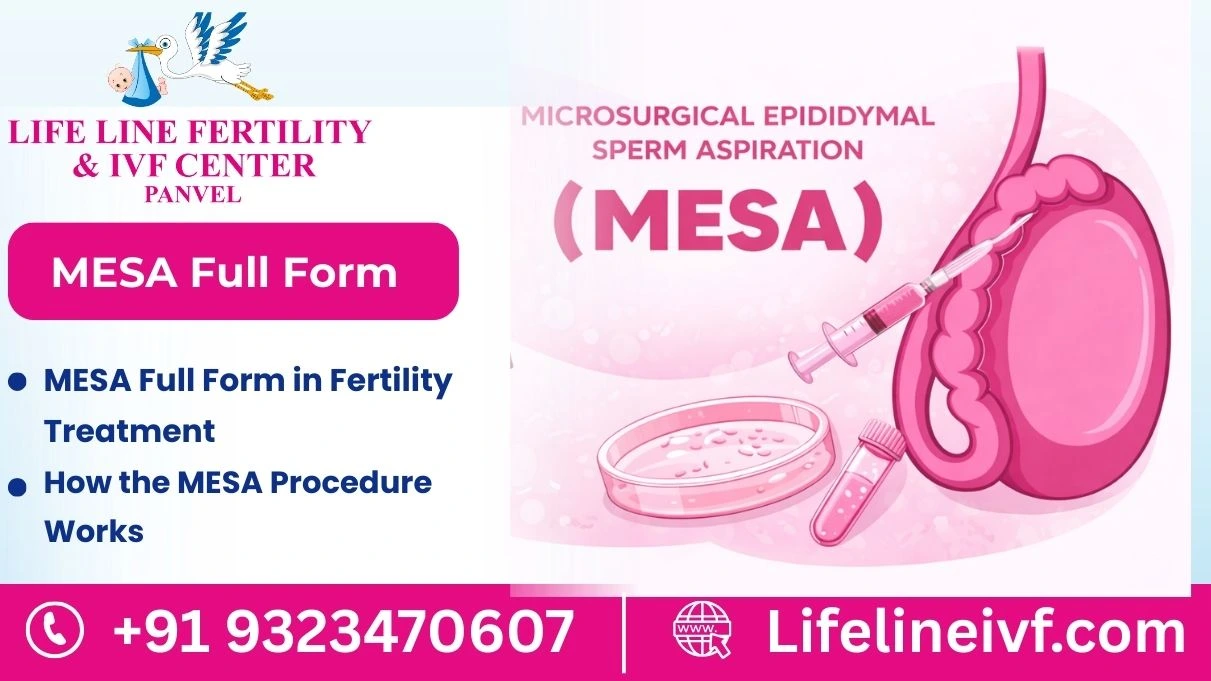
The MESA full form is Microsurgical Epididymal Sperm Aspiration. It’s basically a medical procedure that helps doctors collect sperm directly from a small tube behind the testicles called the epididymis. This tube stores sperm after they are produced in the body.
The sperm collected through the MESA procedure can then be used in fertility treatments like IVF or ICSI, which help fertilize the egg in a laboratory setting. For many couples facing male infertility, this procedure has helped make pregnancy possible.
Understanding the MESA full form and its role in fertility treatment can really help couples feel more informed and a little less anxious when exploring their options.
MESA Full Form in Fertility Treatment
So first things first- the MESA full form stands for Microsurgical Epididymal Sperm Aspiration.
It might sound like a big medical phrase, but the idea behind it is quite simple. The procedure allows doctors to collect sperm directly from the epididymis, which is a tiny tube located behind the testicles where sperm mature and are stored.
In some men, sperm are produced normally in the testicles, but they cannot travel out through the reproductive tract. This usually happens because of a blockage or missing tubes that carry sperm. So even though the body is producing sperm, it never shows up in the semen.
This is where the MESA procedure becomes useful. During the procedure, doctors use a microscope and very delicate surgical tools to carefully retrieve sperm from the epididymis.
Once the sperm are collected, they can be used in assisted fertility treatments like IVF or ICSI. In many cases, these treatments help the sperm fertilize the egg and start embryo development.
For couples dealing with male infertility, understanding the MESA full form and procedure can be an important step in exploring possible treatment options.
Why Is the MESA Procedure Used in Fertility Treatments?
The MESA procedure is usually recommended when sperm cannot be found in semen even though sperm production in the testicles is normal.
Normally, sperm travel from the testicles through small tubes called the vas deferens and eventually leave the body during ejaculation. But if these tubes are blocked or missing, sperm cannot reach the semen.
That means even though sperm are present in the body, they simply can’t get out naturally.
In such situations, fertility specialists may use MESA as a sperm retrieval technique. By collecting sperm directly from the epididymis, doctors can still obtain healthy sperm for fertility treatments.
These sperm are then commonly used in ICSI, where a single sperm is injected directly into an egg. This helps fertilization happen even if only a small number of sperm are available.
For many couples, this approach opens up a chance of pregnancy that might otherwise not be possible.
Who May Need the MESA Procedure?
Not everyone experiencing infertility needs the MESA procedure. It is mainly recommended for certain types of male fertility problems.
Obstructive Azoospermia
One of the most common reasons for the MESA procedure is a condition called obstructive azoospermia.
In this condition, the testicles produce sperm normally, but sperm cannot travel through the reproductive tract due to a blockage. This blockage might be caused by infection, injury, previous surgery, or sometimes a genetic condition.
With MESA, doctors can bypass the blockage and retrieve sperm directly from the epididymis.
Previous Vasectomy
Some men have had a vasectomy earlier in life but later decide they want to have children. In cases where vasectomy reversal is not possible or successful, the MESA procedure may be used to retrieve sperm for IVF or ICSI treatment.
Congenital Absence of the Vas Deferens
In rare cases, some men are born without the tubes that carry sperm from the testicles. This condition is called congenital absence of the vas deferens.
Even though sperm production is normal, sperm cannot leave the body naturally. MESA helps retrieve those sperm so they can be used in fertility treatments.
When Do Doctors Recommend MESA?
The MESA procedure is usually performed by experienced fertility specialists using microsurgical techniques.
Step 1: Anesthesia
The patient is usually given anesthesia so that the procedure is comfortable and pain-free.
Step 2: Accessing the Epididymis
Using a surgical microscope, the doctor carefully locates the epididymis, where mature sperm are stored.
Step 3: Retrieving the Sperm
A small amount of fluid containing sperm is gently collected from the epididymis.
Struggling with Male Infertility or Failed IVF? Explore PICSI IVF for Better Success
Step 4: Lab Examination
The collected fluid is then examined by embryologists in the fertility laboratory. The sperm are prepared so they can be used in IVF or ICSI treatments.
How MESA Works With IVF and ICSI
The MESA procedure itself does not directly lead to pregnancy. Instead, it provides sperm that can be used in assisted reproductive treatments.
Most commonly, the retrieved sperm are used in ICSI, where a single sperm is injected into an egg. This method helps fertilization occur even when sperm numbers are low.
After fertilization happens in the laboratory, the embryo begins to grow for a few days. Then doctors transfer the embryo into the uterus, hoping it will implant and develop into a pregnancy.
Benefits of the MESA Procedure
For many couples dealing with male infertility, the MESA procedure offers several advantages.
Reliable Sperm Retrieval
Because sperm are collected directly from the epididymis, doctors often have a good chance of retrieving usable sperm.
Helpful for Blockage Problems
MESA works especially well for men whose infertility is caused by blocked reproductive tubes rather than problems with sperm production.
Allows IVF and ICSI Treatments
By retrieving sperm through MESA, couples can still move forward with advanced fertility treatments.
Possible Risks or Complications of MESA
The MESA procedure is generally considered safe, especially when performed by experienced doctors. Still, like any medical procedure, there can be some minor risks.
Mild Discomfort
Some men may feel mild pain or swelling for a short time after the procedure.
Infection Risk
Although uncommon, infections can occur after any surgical procedure.
Minor Bleeding
A small amount of bleeding may occur but usually resolves quickly.
Most patients recover fairly quickly and return to normal activities soon.
Success Rate of the MESA Procedure
The success of the MESA procedure depends on the cause of infertility and the overall health of the couple.
In many cases, sperm retrieval through MESA is successful, especially for men with obstructive azoospermia. When those sperm are used in IVF or ICSI treatments, fertilization can occur and pregnancy becomes possible.
However, pregnancy success also depends on factors like the woman’s age, egg quality, and overall reproductive health.
Alternatives to the MESA Procedure
Alternatives to the MESA Procedure
PESA
Percutaneous Epididymal Sperm Aspiration (PESA) retrieves sperm using a needle instead of microsurgery.
TESA
Testicular Sperm Aspiration (TESA) collects sperm directly from the testicles using a fine needle.
TESE
Testicular Sperm Extraction (TESE) involves removing a small sample of testicular tissue to obtain sperm.
A fertility specialist will recommend the method that best suits the patient’s situation.
When Should You Talk to a Doctor About MESA?
Choosing the right fertility center can make an important difference in the journey toward parenthood. Lifeline IVF offers advanced fertility treatments supported by experienced specialists and skilled embryologists who have extensive expertise in assisted reproductive technologies. The clinic uses modern laboratory equipment and advanced medical techniques to support fertilization and embryo development. At the same time, the focus remains on personalized care, recognizing that every couple’s fertility journey is unique. Each patient receives an individualized treatment plan designed according to their medical condition, fertility goals, and overall health, ensuring compassionate and supportive care throughout the treatment process.
Why Choose Lifeline IVF Hospital?
Choosing the right fertility center can make an important difference in the journey toward parenthood. Lifeline IVF offers advanced fertility treatments supported by experienced specialists and skilled embryologists who have extensive expertise in assisted reproductive technologies. The clinic uses modern laboratory equipment and advanced medical techniques to support fertilization and embryo development. At the same time, the focus remains on personalized care, recognizing that every couple’s fertility journey is unique. Each patient receives an individualized treatment plan designed according to their medical condition, fertility goals, and overall health, ensuring compassionate and supportive care throughout the treatment process.
Conclusion
Understanding the MESA full form and how the procedure works can help couples feel more confident when exploring fertility treatment options. MESA, or Microsurgical Epididymal Sperm Aspiration, is a technique that allows doctors to retrieve sperm directly from the epididymis when sperm cannot be released naturally.
When used along with treatments like IVF and ICSI, the MESA procedure has helped many couples overcome male infertility and move closer to their dream of having a child.
FAQs
What does MESA stand for in fertility treatment?
MESA stands for Microsurgical Epididymal Sperm Aspiration. It is a medical procedure used to retrieve sperm directly from the epididymis when sperm cannot be released naturally due to a blockage or other male infertility issues.
Who may need the MESA procedure?
MESA is typically recommended for men with obstructive azoospermia, a condition where sperm production is normal but sperm cannot reach the semen because of a blockage in the reproductive tract.
How is the MESA procedure performed?
In the MESA procedure, a fertility specialist uses a microsurgical technique to access the epididymis and carefully extract sperm. The retrieved sperm are then used for assisted reproductive treatments.
Can MESA help couples facing male infertility?
Take the First Step Toward Safe & Ethical Surrogacy
Struggling with Male Infertility or Failed IVF? Discover How PICSI IVF Can Improve Success – Book a Consultation Today
Contact Information
Ready to take the next step? Let’s begin your journey to parenthood together.
Treatments Available at Lifeline IVF

In Vitro Fertilization (IVF)

Intrauterine Insemination (IUI)

ICSI (Intracytoplasmic Sperm Injection)

Male Infertility Evaluation & Treatment

Female Infertility Solutions

Donor Egg and Donor Sperm Programs

Embryo Freezing & Fertility Preservation

Recurrent IVF Failure Consultation
Our Clinics
Lifeline IVF Clinic in Panvel
Shivaji Rd, Old Panvel, Panvel, Navi Mumbai, Maharashtra 410206
Lifeline IVF Clinic in Kharghar
B 310 Third Floor, The Pacific, Plot No 229, Block G, Sector 13, Kharghar, Navi Mumbai, Maharashtra 410210
Lifeline IVF Clinic in Vashi
Meena 3rd Floor, Shanti Center Building,
Office no 31, Sector 17,
Vashi, Maharashtra 400703