PCOD vs PCOS
Blog PCOD vs PCOS – trying to understand the difference without getting confused These days a lot of girls and women hear the words PCOD and PCOS and instantly get worried. Some think both are same. Some think it’s something very serious. And honestly, many people just get confused by the terms. If you’ve been searching about PCOD vs PCOS, you’re definitely not alone. Most people first hear about it when periods become irregular or when a doctor mentions it after a scan. And then suddenly there’s Google searches, advice from friends, random diet tips… it all gets overwhelming. So let’s just slow down and understand this in simple words. No heavy medical talk. Just normal explanation like someone is sitting with you and explaining calmly. Even a 13-14 year old reading this should be able to understand what’s going on and why these terms matter. What is PCOD actually? PCOD stands for Polycystic Ovarian Disease. In simple terms, it means the ovaries start producing a lot of immature eggs. These eggs don’t get released properly. Over time they can turn into small cysts. Because of that, hormone balance changes a bit. Many girls with PCOD may notice irregular periods, weight gain, acne or hair fall. But PCOD is quite common. A lot of women have it and still live normal healthy lives. With the right lifestyle and some treatment, it can be managed well. Some people panic when they hear it. But PCOD is not always something very serious. It just means the body’s hormones need some balance and care. And what about PCOS? Now PCOS stands for Polycystic Ovary Syndrome. It’s similar to PCOD but usually a bit more complex. In PCOS, the body produces higher levels of male hormones than usual. That affects ovulation and menstrual cycle. Periods may become very irregular. Sometimes they stop for months. Some women also notice weight gain, acne, unwanted hair growth or difficulty conceiving later on. So when people compare PCOD vs PCOS, they’re basically trying to understand how serious the hormonal imbalance is and how it affects the body. PCOD vs PCOS – what’s really different? This is where most confusion happens. Because symptoms look similar. But there are differences. Hormones PCOS usually involves stronger hormonal imbalance compared to PCOD. It can affect metabolism and insulin levels too. Ovulation In PCOD, ovulation may still happen sometimes. In PCOS, ovulation can become irregular or stop for some time. Overall impact PCOD is often milder and manageable with lifestyle changes. PCOS may need more long-term medical care. So when doctors explain PCOD vs PCOS, they’re trying to see which condition is affecting the body and how much. Common symptoms people notice Symptoms of both conditions can look similar, which is why many people mix them up. Irregular periods Weight gain Acne Hair fall Unwanted facial hair Mood swings Difficulty in conceiving Not everyone has all symptoms. Some may have only one or two. That’s why proper check-up is important before assuming anything. Why does this happen? There isn’t always one single reason. It’s usually a mix of hormones, lifestyle and sometimes genetics. Hormonal imbalance When hormone levels change, ovulation and periods get affected. Lifestyle Lack of exercise, junk food, stress, late sleep habits… all these can make symptoms worse. Confused About PCOD vs PCOS or Irregular Periods? Talk to a Women’s Health Specialist Book An Appointment Family history If someone in family has PCOD or PCOS, chances may be slightly higher. This is why doctors always ask about routine, diet and stress when discussing PCOD vs PCOS. How doctors diagnose it Diagnosis isn’t based on one thing. Doctors usually check a combination of: Symptoms Blood tests Ultrasound Hormone levels After seeing reports and symptoms together, they decide whether it’s PCOD or PCOS and what to do next. Treatment options (it’s not one-size-fits-all) Treatment depends on symptoms and what the person needs help with. Some want regular periods, some want weight control, some are planning pregnancy. Lifestyle changes This is usually the first step. Healthy food, exercise, good sleep and stress management help a lot. Even small changes can improve symptoms over time. Medicines Doctors may give medicines to regulate periods, balance hormones or improve ovulation. Fertility support If pregnancy is the goal, there are treatments available that help ovulation and conception. Many women with PCOD vs PCOS manage their health well once they understand what their body needs. What happens if it’s ignored for long? Ignoring symptoms for years may lead to more issues like: Irregular periods for long time Weight gain Risk of diabetes Fertility issues Hormonal imbalance That’s why early diagnosis helps. Not to panic, but to manage things calmly and properly. Living with PCOD or PCOS Living with hormonal imbalance can feel frustrating. Some days you feel fine, some days not so much. Mood swings, skin changes, weight changes… it can affect confidence too. But many women manage this well with routine and support. It’s not about perfect diet or extreme workouts. Just consistent habits. Eating balanced meals, staying active, sleeping on time and managing stress helps more than quick fixes you see online. Understanding PCOD vs PCOS helps remove unnecessary fear. Once you know what’s happening, you can manage it better. Why choose Lifeline IVF? Many families feel comfortable choosing lifeline Ivf because the doctors take time to explain conditions like PCOD and PCOS in a simple and calm way without making patients feel confused or rushed, they guide girls and women step by step through diagnosis and treatment options, and the overall approach feels supportive which helps patients feel more confident while dealing with hormonal health concerns. Final thoughts Hearing words like PCOD or PCOS can feel stressful at first. But both conditions are common and manageable. With the right care and a bit of patience, most women lead completely normal and healthy lives. If periods are irregular, or symptoms like acne, weight gain or mood swings keep happening, it’s better to get checked instead
Oligospermia

Blog Oligospermia – trying to understand low sperm count without all the confusing medical words When couples start planning for a baby and it doesn’t happen quickly, a lot of thoughts start running in the mind. Stress, confusion, sometimes even guilt. And usually people assume it’s always a women’s health issue. But that’s not true. Male fertility matters equally. One word that doctors often use in this situation is oligospermia. The word sounds big and scary, honestly. Most people hear it for the first time and don’t really know what it means. Simply put, oligospermia means low sperm count. That’s it. Nothing more complicated than that. This blog is written in a very normal way, like a conversation. Not heavy medical lecture. Just to help people understand what oligospermia is, why it happens and what can be done about it. Even a teenager reading this for their parents should be able to understand what’s going on. So what exactly is oligospermia? Oligospermia basically means the sperm count is lower than normal. For pregnancy to happen naturally, sperm need to reach the egg and fertilize it. When the number of sperm is low, chances become less. Not zero. Just less. Many men don’t even know they have oligospermia until they get tested. There are usually no clear signs or symptoms. Everything feels normal. That’s why it can be surprising when reports come. Doctors usually find this through a semen test. It checks how many sperm are there, how they move and their shape. Based on that, they guide what to do next. Is low sperm count very common? Actually, yes. More common than people think. Many couples facing fertility delays find out that sperm count is part of the reason. But the good thing is, in many cases it can be improved or managed. Some people feel embarrassed talking about male fertility. But honestly, it’s just a health condition like any other. Nothing to feel ashamed about. Understanding oligospermia helps remove that fear a bit. Why does oligospermia happen? There isn’t always one single reason. Sometimes it’s lifestyle, sometimes medical, sometimes just body’s natural variation. Lifestyle reasons Smoking, alcohol, stress, lack of sleep, unhealthy diet… all these can affect sperm production. Even constant heat exposure, like sitting long hours with laptops or very tight clothing, may play a role. Health conditions Hormone imbalance, infections, varicocele (a vein condition near testicles), and certain illnesses can reduce sperm count. Environmental factors Pollution, chemicals, and long-term exposure to certain substances may also impact sperm health slowly over time. When doctors understand the cause, they can suggest treatment for oligospermia more clearly. Are there any symptoms at all? Most of the time, not really. That’s what makes it tricky. Many men feel completely fine. No pain, no discomfort. The only sign is difficulty in conceiving after trying for months or years. In some cases, there may be signs like low energy, hormonal issues, or reduced facial hair growth. But that’s not common in every case. Usually, a simple semen test gives the answer. How do doctors check for oligospermia? The main test is semen analysis. It’s simple and done in a lab. It checks: Sperm count Movement of sperm Shape of sperm Sometimes doctors repeat the test after a few weeks to confirm. They may also suggest blood tests to check hormone levels. Once reports are clear, they talk about next steps. Treatment options (it’s not always complicated) Many people think low sperm count means big treatment immediately. But that’s not always true. In some cases, small changes help. Lifestyle changes Better diet, regular sleep, exercise, less stress, stopping smoking and alcohol… these things can improve sperm health over time. It doesn’t happen in a week though. Usually takes a few months. Worried About Low Sperm Count or Oligospermia? Talk to a Fertility Specialist Book An Appointment Medicines or supplements Doctors may suggest medicines to improve sperm production or treat infections. Fertility treatments If natural improvement isn’t enough, treatments like IVF or ICSI may be suggested. Many couples with oligospermia still become parents with the right help. Can things improve naturally? Sometimes yes. Especially if the cause is lifestyle related. Healthy habits can make a big difference. Eating better, sleeping properly, reducing stress and staying active helps overall health, including sperm health. It takes patience though. Changes don’t show overnight. The emotional side (which people don’t talk about much) Hearing about low sperm count can be tough emotionally. Some men feel stressed or guilty. Some feel embarrassed. But it’s important to remember this is just a medical condition. Not anyone’s fault. Open conversations between partners help a lot. Support from doctors also makes things easier. Understanding oligospermia properly reduces unnecessary worry. Why choose Lifeline Hospital? Many couples feel more comfortable choosing Lifeline Hospital because the doctors take time to explain fertility concerns in simple everyday language instead of rushing through appointments, they guide patients step by step without making the process feel overwhelming, and the environment feels supportive and calm which helps families deal with sensitive issues like low sperm count with more confidence and less stress. Final thoughts Oligospermia may sound like a big scary word at first, but it simply means low sperm count. And in many cases, it can be managed or improved. It doesn’t mean parenthood is impossible. It just means the journey might need a bit more guidance and support. If you or someone in your family is facing this situation, try not to panic. Talk to a specialist, understand the reports, and take things one step at a time. Many couples go through this and still reach their goal of having a child. Sometimes all it takes is proper diagnosis, patience, and the right medical support. FAQs Can oligospermia be treated? In many cases yes, especially if the cause is known. Lifestyle changes and treatment can help. Does low sperm count mean no pregnancy is possible? No, it may make it harder but not impossible. Many couples still
ICSI vs IVF
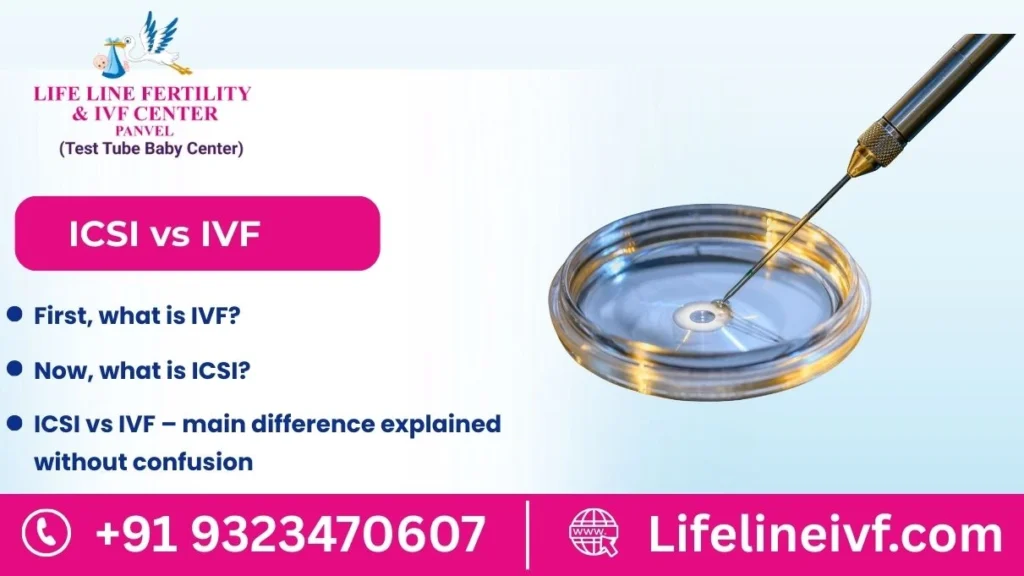
Blog ICSI vs IVF – understanding the difference in a simple and real way When couples visit a fertility clinic, they often hear two words again and again — IVF and ICSI. For doctors these are normal terms, but for families hearing them for the first time, it can feel confusing. Most people go home and search online for ICSI vs IVF to understand what the difference actually is. If you’re reading this, maybe you or someone in your family is trying to understand fertility treatments. Don’t worry, this guide is written in very simple words. No complicated medical talk. Just clear explanation so anyone, even a young teen helping parents read online, can follow along and understand what’s happening. We’ll go step by step. First what IVF is, then what ICSI is, and then we’ll talk about how they are different, which one doctors choose and why. What is IVF? IVF stands for In Vitro Fertilization. It’s one of the most commonly used fertility treatments today. In IVF, eggs and sperm are brought together outside the body in a lab. Here’s how it works in a basic way. The woman is given some medicines for a few days so her body produces multiple eggs. Doctors collect those eggs using a small procedure. Then sperm is added to the eggs in a lab dish. Fertilization happens there. After a few days, the embryo is placed into the uterus. So IVF helps sperm and egg meet outside the body when they are not able to meet properly inside. Many couples start with IVF when they are facing fertility issues. But then they hear about ICSI and wonder about ICSI vs IVF and which one is better. What is ICSI? ICSI is actually a type of IVF. The full name is Intracytoplasmic Sperm Injection. It sounds technical, but the idea is simple. In normal IVF, sperm and egg are kept together and sperm enters egg naturally. In ICSI, doctors don’t leave it to chance. They pick one healthy sperm and inject it directly into the egg using a tiny needle. After fertilization happens, the embryo is placed in the uterus just like IVF. So when people compare ICSI vs IVF, the main difference is how the sperm and egg meet. Everything else is quite similar. ICSI vs IVF – main difference explained without confusion Both treatments follow almost the same process. The woman takes medicines, eggs are collected, embryo is placed in uterus. But fertilization method changes. In IVF Egg and sperm are mixed in a dish. Sperm fertilizes egg on its own. In ICSI Doctor injects one sperm directly into the egg. Why this matters If sperm count and quality are normal, IVF is often enough. If sperm count is very low or sperm is weak, ICSI is usually suggested. That’s why many couples try to understand ICSI vs IVF difference before starting treatment. It helps them feel more prepared. When doctors usually suggest IVF Doctors look at test reports before deciding anything. IVF is suggested when fertilization can still happen naturally but needs support. Some common situations include: Blocked fallopian tubes Irregular ovulation Endometriosis Unexplained infertility Couples trying for years without success If sperm health looks normal in reports, IVF may be the first step. But if fertilization doesn’t happen, doctors may suggest moving to ICSI in the next cycle. That’s when couples start comparing ICSI vs IVF success rate. When doctors recommend ICSI instead ICSI is often used when there is a sperm-related issue. Because in this method, doctors help the sperm directly fertilize the egg. Common reasons for ICSI: Very low sperm count Weak sperm movement Poor sperm quality Previous IVF fertilization failure Frozen sperm sample cases ICSI gives more control over fertilization. So in cases where IVF may not work easily, ICSI improves chances. But many couples also ask about ICSI vs IVF cost before deciding. What about success rates – ICSI vs IVF? This is one of the biggest questions couples ask. People want to know which has better success rate. The truth is, success depends on many things, not just the method. Age of the woman, egg quality, sperm health and overall medical condition matter a lot. In couples with normal sperm health, IVF success can be very good. In couples with male fertility issues, ICSI often gives better results. So instead of asking which treatment is better overall, doctors look at individual case and suggest accordingly. That’s the right way to think about ICSI vs IVF. Cost difference – ICSI vs IVF cost in India Let’s talk about cost because it matters to most families. Fertility treatments require planning. IVF usually costs a bit less than ICSI because ICSI needs extra lab work and expertise. On average: IVF cost: around ₹1 lakh to ₹2 lakh per cycle ICSI cost: around ₹1.2 lakh to ₹2.5 lakh or more Prices vary depending on medicines, tests and city. In larger cities, cost may be slightly higher. When couples compare ICSI vs IVF cost in India, they usually find ICSI slightly more expensive. But doctors choose treatment based on medical need, not just cost difference. Not Sure Whether to Choose ICSI or IVF? Talk to a Fertility Specialist Book An Appointment So, which is better – ICSI or IVF? Honestly, there’s no one answer for everyone. Some couples do perfectly well with IVF. Some need ICSI for better chances. Sometimes doctors even combine both methods in one cycle depending on egg and sperm quality. The important thing is proper testing and consultation. Once reports are clear, doctor can guide which option suits best. Understanding ICSI vs IVF helps couples ask better questions and feel less confused during appointments. Why choose Lifeline IVF? Many families feel more at ease choosing Lifeline IVF because the team focuses on explaining fertility options like IVF and ICSI in a calm and simple manner, taking time to discuss reports and possible treatment paths without rushing decisions, and being transparent about procedures and expected