How Does The Embryo Get Nourished Inside The Mother’s Body
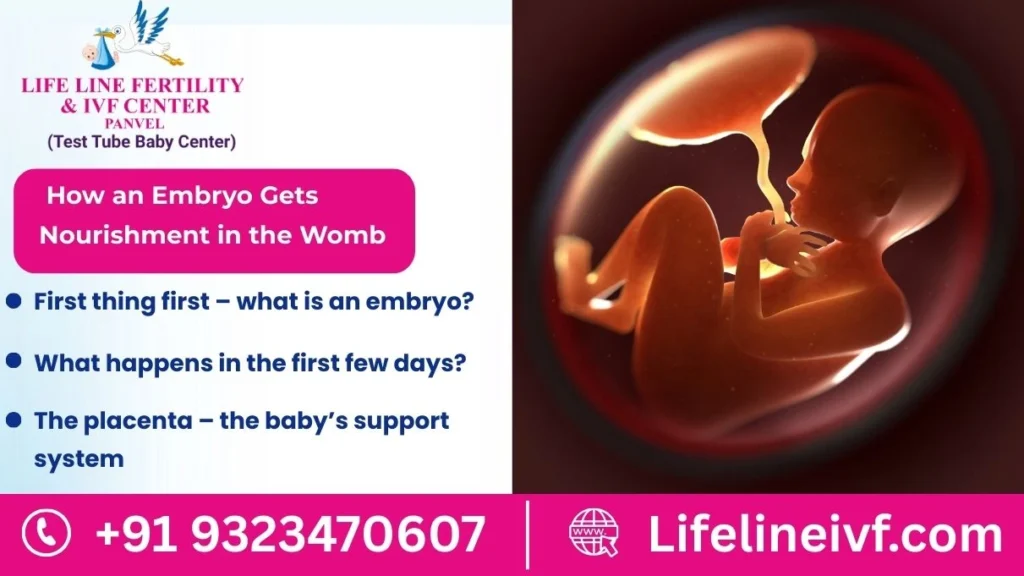
Blog How does the embryo get nourished inside the mother’s body – simple explanation for curious minds This is one of those questions people randomly ask during pregnancy. Someone in the family is expecting and suddenly everyone becomes curious. How does the baby eat? Does it get hungry? How does the embryo get nourished inside the mother’s body? It actually sounds like a big science question, but the answer is quite simple and also kind of amazing. The body already knows what to do. From the moment pregnancy begins, the mother’s body starts taking care of that tiny embryo without anyone having to “teach” it. This blog is written in very easy language. Not like a textbook. Just like a normal explanation you’d hear at home or in a clinic. Even a 12–14 year old reading this should understand how the baby inside gets nutrients and grows. First thing first – what is an embryo? So when sperm meets egg, a tiny life starts forming. At the very beginning, it’s just a small group of cells. That early stage is called an embryo. It’s very, very small. You can’t even see it with your eyes. But even though it’s tiny, it still needs nourishment to grow. Just like a plant needs water and sunlight, the embryo needs nutrients and oxygen. And all of that comes from the mother’s body. So when people ask how does the embryo get nourished inside the mother’s body, the answer starts from the moment it attaches inside the uterus. What happens in the first few days? After fertilization, the embryo travels to the uterus and attaches to the uterine wall. This is called implantation. Once that happens, the body starts supplying nutrients. In the early days, the embryo gets nourishment directly from the lining of the uterus. It’s like the mother’s body is already prepared to support it. No one has to think about it. It just happens naturally. Many people don’t realise that even before the placenta fully forms, the embryo is already getting support from the mother’s body. The placenta – the baby’s support system As pregnancy continues, a special organ forms inside the uterus. This is called the placenta. It becomes the main source of nourishment for the growing baby. What does the placenta do? It acts like a connection between the mother and the baby. It helps pass nutrients and oxygen from the mother’s blood to the embryo. How food reaches the baby Whatever the mother eats gets digested and goes into her bloodstream. From there, nutrients travel through the placenta and reach the baby. Removing waste The placenta also helps remove waste products from the baby’s body and sends them back to the mother’s body to be processed. So when someone wonders how does the embryo get nourished inside the mother’s body, the placenta is a big part of the answer. The umbilical cord (baby’s lifeline) You’ve probably heard of the umbilical cord. It connects the baby to the placenta. Through this cord, nutrients and oxygen travel to the baby. It’s kind of like a supply line. Food, oxygen, vitamins… everything goes through this cord. And waste comes back through it too. This system keeps working throughout pregnancy. It’s honestly quite fascinating how the body manages all of this automatically. Why the mother’s health matters so much Since the baby gets everything from the mother, her health becomes very important. What she eats, drinks, and how she rests affects the baby. If the mother eats nutritious food, the baby receives those nutrients. If she takes doctor-recommended vitamins, those help too. Even sleep and stress levels matter. That’s why during pregnancy, doctors always say: eat balanced meals, drink water, take supplements and rest well. All of this supports how the embryo grows. So when asking how does the embryo get nourished inside the mother’s body, it’s not just about organs like the placenta. It’s also about the mother taking care of herself. Nutrients that help the embryo grow The growing embryo needs different nutrients: Folic acid for development Iron for blood supply Calcium for bones Protein for growth Vitamins for overall health Doctors usually recommend prenatal vitamins because they help ensure the baby gets enough nutrients even if the mother’s diet isn’t perfect every day. Early weeks vs later weeks In the very early weeks, nourishment comes from the uterine lining. As weeks pass, the placenta develops and takes over as the main support system. By the second trimester, the placenta and umbilical cord are fully working together to support the baby’s growth. It’s a smooth process that the body handles naturally. This whole system answers the question how does the embryo get nourished inside the mother’s body in a very simple way. The mother’s body becomes the baby’s source of everything. Have Questions About Early Pregnancy or Baby’s Growth in the Womb? Speak to a Specialist Book An Appointment Why choose lifeline Ivf? During pregnancy or fertility care, most families look for a place where they feel comfortable asking questions and getting clear answers without feeling rushed. At lifeline Ivf , the focus is on explaining every stage of pregnancy and early development in a simple and calm way so parents understand what’s happening inside the body. The team takes time to guide patients through check-ups, nutrition advice, and routine monitoring, helping families feel more relaxed and supported throughout the journey instead of overwhelmed by medical terms or processes. Final thoughts Pregnancy is one of those things where the body quietly does so much work behind the scenes. From the moment an embryo forms, the mother’s body starts nourishing it. Through the placenta and umbilical cord, the baby receives everything it needs to grow. Understanding how does the embryo get nourished inside the mother’s body makes you appreciate how well the human body is designed. It also reminds us why good nutrition and proper care during pregnancy matter so much. If someone in your family is expecting, learning about