
Negative signs after embryo transfer
Blog Negative signs after embryo transfer – what people notice and when to not panic After an embryo transfer, most couples enter what people call the “waiting period”. And honestly, that waiting phase can feel really long. Every small feeling in the body suddenly feels important. A tiny cramp, no symptoms at all, a bit of spotting… everything makes people wonder if something is wrong. That’s why many search online about negative signs after embryo transfer. First thing to say clearly, not every symptom means something bad happened. The body goes through changes after the transfer. Some things are normal. Some things need attention. The tricky part is knowing the difference without panicking too much. This blog is just a calm, simple explanation. No heavy medical terms. Just real talk so normal people can understand what might be normal and when to check with a doctor. What happens in the body after embryo transfer? Once the embryo is placed inside the uterus, it doesn’t instantly attach. It needs a few days. During this time, it tries to implant into the uterine lining. That’s the step where pregnancy actually begins. While this is happening, the body might feel a bit different. Some people feel mild cramps. Some feel nothing at all. Some feel tired. And because this phase is sensitive, people naturally worry about negative signs after embryo transfer. But the truth is, every body reacts differently. There’s no one fixed sign that tells you everything is working or not working. Symptoms that make people worry (but can be normal) A lot of things people think are negative signs are actually quite common. Mild cramps Light cramping can happen. The uterus is adjusting and sometimes that causes a pulling feeling. It doesn’t always mean something bad. Light spotting Very light spotting can happen. Some people even get this when implantation happens. It doesn’t always mean failure. No symptoms at all This one confuses people the most. Some expect to feel something. But many successful pregnancies start with zero symptoms. So not feeling anything doesn’t automatically mean negative outcome. So while searching about negative signs after embryo transfer, it’s important not to assume the worst from every small change. Signs that should not be ignored completely Now there are a few symptoms where it’s better to talk to a doctor instead of guessing. Heavy bleeding If bleeding is heavy like a regular period, it’s better to inform the doctor. Strong abdominal pain Severe pain that doesn’t settle or keeps increasing should be checked. Fever or unusual discomfort Fever or feeling very unwell is not typical and should be discussed with a specialist. These don’t always mean the transfer failed, but they should be checked just to be safe. Feeling Anxious After Your Embryo Transfer? We’re Here to Help Book An Appointment The emotional side (this part is real) The days after embryo transfer can be emotionally heavy. People overthink everything. One moment hopeful, next moment worried. It’s very normal to feel like this. Sometimes stress itself makes the body feel different. You may feel tired, restless, or extra aware of every sensation. That’s why doctors usually suggest resting, staying calm and not over-checking symptoms every hour. Understanding negative signs after embryo transfer helps reduce that constant anxiety a bit. What if there are no signs at all? Many people expect a sign to tell them if it worked. But honestly, there’s often no clear sign in the early days. Some people who later get positive results say they felt nothing at all during the waiting period. So not feeling anything is also okay. The only real confirmation comes from the pregnancy test done after about 10–14 days. Waiting is the hardest part, not knowing. Why choose lifeline Ivf? Many couples feel more at ease choosing lifeline Ivf because the doctors and staff understand how stressful the days after embryo transfer can be and they try to guide patients calmly instead of giving rushed answers, they explain what symptoms can be normal and what needs attention in a simple way, and overall the environment feels supportive which helps couples feel less anxious during that waiting period when every small symptom can feel like a big deal. Final thoughts After an embryo transfer, it’s very easy to overthink every feeling. But not every symptom is a negative sign. Some mild cramps, light spotting, or even no symptoms at all can still be normal. If there’s heavy bleeding, strong pain, or fever, then yes, it’s better to check with a doctor. Otherwise, try to give your body time. Implantation takes time and every person’s body reacts differently. Understanding negative signs after embryo transfer helps you stay informed without panicking over every small change. The waiting phase is tough, but being calm and patient really helps during this time. FAQs Are cramps after embryo transfer a bad sign? Not always. Mild cramps can be normal as the uterus adjusts. Does spotting mean the transfer failed? No, light spotting can still happen in successful cases. What if I feel completely normal? That’s also normal. Some people feel no symptoms at all. When should I call the doctor? If there is heavy bleeding, severe pain, or fever, it’s best to contact the clinic. When will I know the result? Usually through a blood test about 10–14 days after embryo transfer. Not always. Mild cramps can be normal as the uterus adjusts. No, light spotting can still happen in successful cases. That’s also normal. Some people feel no symptoms at all. If there is heavy bleeding, severe pain, or fever, it’s best to contact the clinic. Usually through a blood test about 10–14 days after embryo transfer. Plan Your Parenthood Journey With Clear Cost Guidance Speak to a fertility specialist to understand ICSI treatment cost in Navi Mumbai, available options, and the right treatment plan for you. Book An Appointment
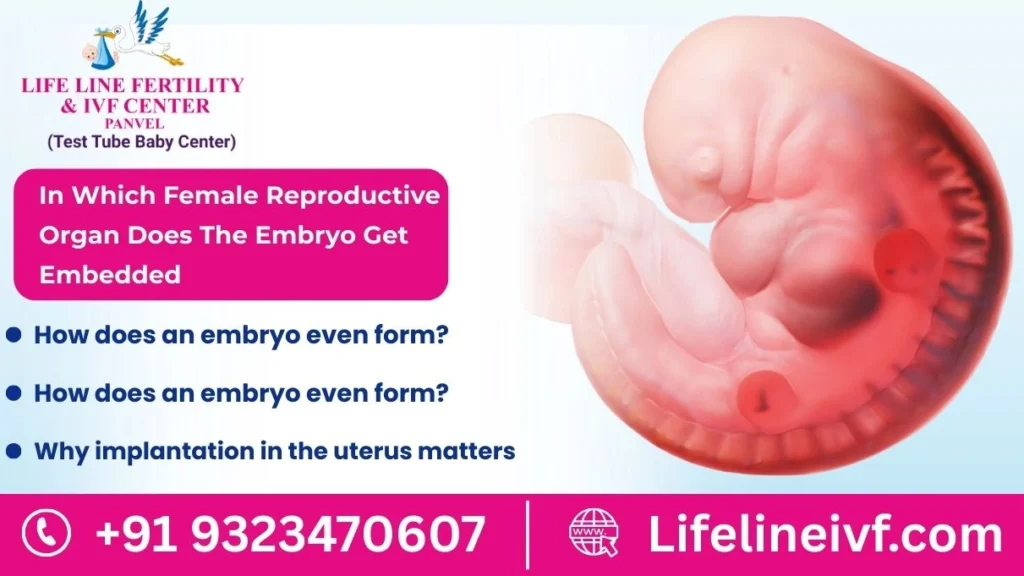
In Which Female Reproductive Organ Does The Embryo Get Embedded
Blog In which female reproductive organ does the embryo get embedded This is one of those questions people suddenly ask when pregnancy is discussed at home or in school. Someone might ask, “Where exactly does the baby attach inside the body?” or “In which female reproductive organ does the embryo get embedded?” It sounds like a biology exam question, but honestly the answer is quite simple. And once you understand it, it makes the whole idea of pregnancy feel a little more real and less confusing. We’re not going to use complicated science words here. Just normal explanation, like how a doctor or elder might explain at home. Even a young teen reading this should be able to understand where the embryo settles and how pregnancy actually begins. How does an embryo even form? Before talking about where it gets embedded, let’s go back a bit. Pregnancy starts when a sperm meets an egg. This usually happens in the fallopian tube. Once they join, a tiny cell begins forming. That’s the start of life. This early stage is called an embryo. This little embryo doesn’t stay in the fallopian tube. It slowly travels toward the uterus. This journey takes a few days. It’s almost like the embryo is looking for the right place to settle. And the place it finally settles in is… the uterus. So when someone asks in which female reproductive organ does the embryo get embedded, the simple answer is the uterus. The uterus – where the embryo settles and grows The uterus is also called the womb. It’s a soft, strong organ inside the female body. Every month, the uterus prepares itself just in case pregnancy happens. The inner lining becomes thick and full of blood supply. When the embryo reaches the uterus, it attaches itself to this lining. This step is called implantation. Once implantation happens, pregnancy begins. From that point onward, the uterus becomes the baby’s home. It provides space, safety, and nutrients for the baby to grow over the next months. Why implantation in the uterus matters Implantation is a very important moment. Without it, pregnancy can’t continue. The embryo needs to attach to the uterine wall to receive nourishment. Connection to mother’s blood supply The uterine lining has a rich blood supply. Once the embryo attaches, nutrients and oxygen can reach it. Placenta starts forming After implantation, the placenta begins developing. This becomes the main support system for the baby. Safe place for growth The uterus protects the embryo and gives it room to grow safely. So again, if someone asks in which female reproductive organ does the embryo get embedded, it’s always the uterus where it should happen. What happens after the embryo attaches? Once the embryo embeds itself, the body starts adjusting to support pregnancy. The placenta forms. The umbilical cord develops. Nutrients and oxygen begin reaching the baby. Over time, the embryo grows and becomes a fetus. The uterus stretches slowly to make space. Everything happens step by step, almost automatically. The body knows what to do. It’s actually quite amazing when you think about it. No one has to “teach” the body. It just happens naturally. What if implantation doesn’t happen properly? Sometimes fertilization happens but implantation doesn’t. In that case, pregnancy doesn’t continue. This is quite common and many people don’t even realise it happens. There are also rare cases where implantation happens outside the uterus, like in a fallopian tube. That’s called ectopic pregnancy and it needs medical care. But normally, the embryo should embed in the uterus. That’s the correct place for healthy pregnancy to continue Why choose lifeline Ivf? Many families feel more comfortable visiting lifeline Ivf because the doctors there take time to explain pregnancy and reproductive health in very simple language instead of rushing through appointments, they listen to patient concerns patiently and guide them step by step through early pregnancy stages, and overall the environment feels calm and supportive which helps people feel less nervous and more confident while asking even basic questions about how pregnancy begins and develops. Not Sure How the Embryo Grows Inside the Womb? Consult a Specialist Book An Appointment Final thoughts So to answer the question clearly, in which female reproductive organ does the embryo get embedded, it happens in the uterus. That’s where the embryo attaches, receives nourishment, and grows throughout pregnancy. It may sound like a simple school question, but understanding it helps people appreciate how pregnancy really works. The body prepares itself, supports the embryo, and creates a safe space for new life to grow. If someone in your family is expecting, knowing these small details can make the journey feel more real and less confusing. And honestly, it’s quite fascinating how everything connects and works together inside the body. FAQs Where does fertilization happen? Usually in the fallopian tube, before the embryo travels to the uterus. Where does the embryo attach? It attaches to the uterine lining. That’s where it gets embedded. How many days after fertilization does implantation happen? Usually around 6–10 days after fertilization. Can implantation happen somewhere else? Rarely, yes. That’s called ectopic pregnancy and needs medical attention. Why is the uterus important? Because it provides the right environment, nutrients and protection for the embryo to grow into a baby. Usually in the fallopian tube, before the embryo travels to the uterus. It attaches to the uterine lining. That’s where it gets embedded. Usually around 6–10 days after fertilization. Rarely, yes. That’s called ectopic pregnancy and needs medical attention. Because it provides the right environment, nutrients and protection for the embryo to grow into a baby. Plan Your Parenthood Journey With Clear Cost Guidance Speak to a fertility specialist to understand ICSI treatment cost in Navi Mumbai, available options, and the right treatment plan for you. Book An Appointment