
डोनर एग IVF कॉस्ट
Blog डोनर एग IVF कॉस्ट : खर्च, प्रक्रिया और जरूरी जानकारी मां बनना हर महिला का सपना होता है, लेकिन कुछ महिलाओं के लिए प्राकृतिक रूप से गर्भधारण करना आसान नहीं होता। बढ़ती उम्र, अंडाशय (Ovaries) की कम कार्यक्षमता, समय से पहले मेनोपॉज या कुछ चिकित्सीय कारणों से अपने अंडों से गर्भधारण संभव नहीं हो पाता। ऐसे मामलों में डोनर एग IVF एक प्रभावी और सफल उपचार विकल्प माना जाता है। यदि आप डोनर एग IVF करवाने की सोच रहे हैं, तो सबसे पहले इसके खर्च, प्रक्रिया, सफलता दर और कानूनी पहलुओं के बारे में सही जानकारी होना जरूरी है। इस लेख में हम डोनर एग IVF कॉस्ट से जुड़े सभी महत्वपूर्ण सवालों के आसान और स्पष्ट उत्तर देंगे। डोनर एग IVF क्या है और इसकी आवश्यकता कब पड़ती है? डोनर एग IVF एक ऐसी प्रजनन (Fertility) तकनीक है जिसमें किसी स्वस्थ महिला द्वारा दान किए गए अंडों (Donor Eggs) का उपयोग किया जाता है। इन अंडों को पुरुष के शुक्राणुओं के साथ लैब में निषेचित (Fertilize) किया जाता है और विकसित भ्रूण (Embryo) को महिला के गर्भाशय में स्थानांतरित किया जाता है। यह उपचार उन महिलाओं के लिए उपयोगी होता है जिनके अपने अंडों की गुणवत्ता या संख्या बहुत कम होती है। कई बार 40 वर्ष से अधिक उम्र की महिलाओं में अंडों की गुणवत्ता काफी कम हो जाती है, जिससे IVF की सफलता प्रभावित होती है। ऐसे मामलों में डोनर एग IVF गर्भधारण की संभावना बढ़ा सकता है। इसके अलावा समय से पहले मेनोपॉज, बार-बार IVF असफल होना, आनुवंशिक बीमारियों का खतरा या कैंसर के इलाज के कारण अंडाशय की कार्यक्षमता प्रभावित होने पर भी डॉक्टर डोनर एग IVF की सलाह दे सकते हैं। डोनर एग की कीमत क्या होती है? भारत में केवल डोनर एग की कीमत अलग-अलग शहर, क्लिनिक और डोनर की उपलब्धता के अनुसार बदल सकती है। सामान्यतः डोनर एग से जुड़ी लागत लगभग ₹30,000 से ₹80,000 या इससे अधिक हो सकती है। हालांकि केवल डोनर एग की कीमत जानना पर्याप्त नहीं है। डोनर एग IVF के कुल खर्च में IVF प्रक्रिया, लैब तकनीक, दवाइयां, जांच, भ्रूण तैयार करना, एम्ब्रियो ट्रांसफर और फॉलो-अप जैसी कई सेवाएं शामिल होती हैं। इसलिए प्रत्येक मरीज के लिए कुल लागत अलग हो सकती है। सटीक खर्च जानने के लिए अनुभवी फर्टिलिटी विशेषज्ञ से व्यक्तिगत परामर्श लेना सबसे बेहतर विकल्प होता है। डोनर एग IVF की लागत किन-किन बातों पर निर्भर करती है? डोनर एग IVF की लागत सभी मरीजों के लिए समान नहीं होती। कई चिकित्सीय और तकनीकी कारण इसके खर्च को प्रभावित करते हैं। सबसे पहले क्लिनिक की विशेषज्ञता और उपलब्ध सुविधाएं महत्वपूर्ण भूमिका निभाती हैं। आधुनिक IVF लैब, अनुभवी एम्ब्रियोलॉजिस्ट और उन्नत तकनीक वाले केंद्रों में उपचार की गुणवत्ता बेहतर होती है, जिससे लागत में अंतर आ सकता है। दूसरा, मरीज की स्वास्थ्य स्थिति भी खर्च को प्रभावित करती है। यदि अतिरिक्त जांच, हार्मोनल उपचार, हिस्टेरोस्कोपी या अन्य प्रक्रियाओं की आवश्यकता हो, तो कुल लागत बढ़ सकती है। यदि भ्रूण को फ्रीज करना हो, जेनेटिक टेस्टिंग (PGT) करानी हो या अतिरिक्त दवाइयों की आवश्यकता हो, तो भी खर्च बढ़ सकता है। इसलिए प्रत्येक मरीज की उपचार योजना अलग होती है और उसी के अनुसार कुल लागत तय होती है। डोनर एग IVF के लिए आज ही Lifeline IVF Panvel में अपनी कंसल्टेशन बुक करें। Book An Appointment क्या डोनर एग IVF की सफलता उम्र के अनुसार बदलती है? डोनर एग IVF की सबसे बड़ी विशेषता यह है कि इसकी सफलता मुख्य रूप से डोनर एग की गुणवत्ता पर निर्भर करती है। क्योंकि डोनर आमतौर पर युवा और स्वस्थ महिलाएं होती हैं, इसलिए उनके अंडों की गुणवत्ता बेहतर होती है। यदि महिला का गर्भाशय स्वस्थ है, तो अधिक उम्र में भी डोनर एग IVF के माध्यम से सफल गर्भधारण संभव हो सकता है। हालांकि उम्र बढ़ने के साथ हाई ब्लड प्रेशर, डायबिटीज, थायरॉइड या गर्भाशय से जुड़ी अन्य समस्याएं गर्भावस्था को प्रभावित कर सकती हैं। इसलिए केवल उम्र ही सफलता का एकमात्र आधार नहीं होती। महिला का संपूर्ण स्वास्थ्य, गर्भाशय की स्थिति और डॉक्टर द्वारा बनाई गई उपचार योजना भी सफलता में महत्वपूर्ण भूमिका निभाते हैं। डोनर एग कैसे चुना जाता है और क्या इसकी पहचान गोपनीय रहती है? भारत में डोनर एग का चयन निर्धारित कानूनी और नैतिक दिशानिर्देशों के अनुसार किया जाता है। डोनर बनने वाली महिलाओं की विस्तृत मेडिकल जांच, संक्रमण संबंधी जांच और आवश्यक स्वास्थ्य परीक्षण किए जाते हैं ताकि सुरक्षित और गुणवत्तापूर्ण उपचार सुनिश्चित किया जा सके। डोनर का चयन करते समय उसकी उम्र, स्वास्थ्य, मेडिकल हिस्ट्री और अन्य आवश्यक मानकों का विशेष ध्यान रखा जाता है। मरीज को डोनर की व्यक्तिगत पहचान नहीं बताई जाती। भारतीय कानून के अनुसार डोनर और प्राप्तकर्ता (Recipient) दोनों की पहचान पूरी तरह गोपनीय रखी जाती है। इससे दोनों पक्षों की निजता और सुरक्षा बनी रहती है। डोनर एग IVF की पूरी प्रक्रिया कैसे होती है? डोनर एग IVF की शुरुआत डॉक्टर द्वारा मरीज की विस्तृत जांच और परामर्श से होती है। सबसे पहले यह सुनिश्चित किया जाता है कि महिला का गर्भाशय गर्भधारण के लिए तैयार है। इसके बाद चयनित डोनर से अंडे प्राप्त किए जाते हैं। पुरुष के शुक्राणुओं के साथ इन अंडों का लैब में निषेचन किया जाता है। निषेचन के बाद भ्रूण को कुछ दिनों तक विशेष लैब में विकसित किया जाता है। जब भ्रूण अच्छी गुणवत्ता का विकसित हो जाता है, तब उसे महिला के गर्भाशय में सावधानीपूर्वक ट्रांसफर किया जाता है। इसके बाद हार्मोनल दवाइयों की सहायता से गर्भावस्था को समर्थन दिया जाता है। एम्ब्रियो ट्रांसफर के लगभग 10 से 14 दिनों बाद ब्लड टेस्ट के माध्यम से गर्भधारण की पुष्टि की जाती है। डोनर एग IVF में कितना समय लगता है? डोनर एग IVF की पूरी प्रक्रिया सामान्यतः 4 से 8 सप्ताह के भीतर पूरी हो सकती है। हालांकि यह अवधि हर मरीज में अलग हो सकती है। यदि पहले से सभी जांच पूरी हों और उपयुक्त डोनर उपलब्ध हो, तो प्रक्रिया अपेक्षाकृत जल्दी पूरी हो सकती है। लेकिन यदि अतिरिक्त उपचार, गर्भाशय की तैयारी या अन्य चिकित्सीय कारण हों, तो समय थोड़ा बढ़ सकता है। उपचार के दौरान डॉक्टर द्वारा दिए गए निर्देशों का पालन करने से पूरी
Ivf with donor egg process step by step
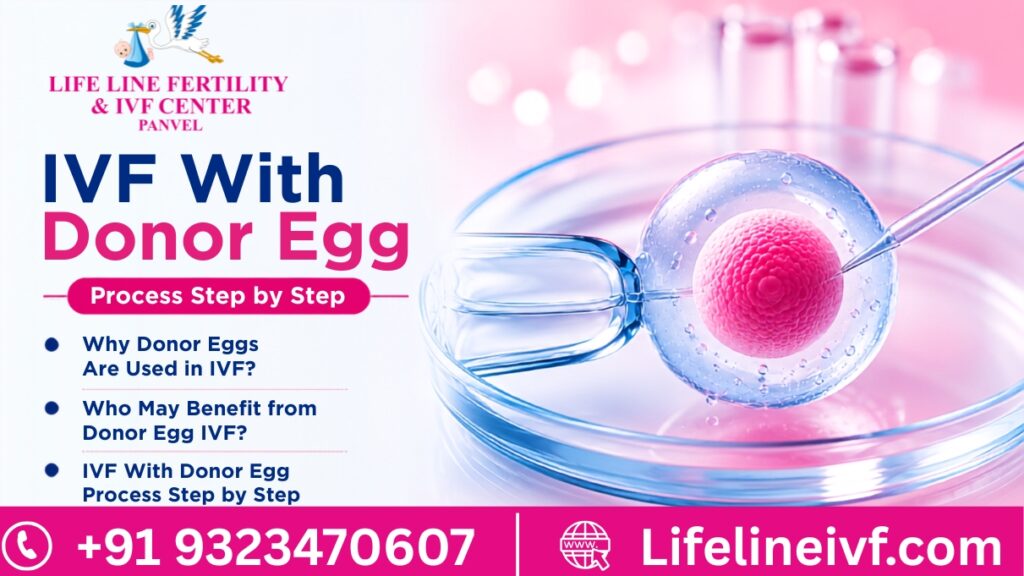
Blog IVF With Donor Egg Process Step by Step For many couples and individuals facing infertility, donor egg IVF has created new possibilities for building a family. Women with poor ovarian reserve, premature ovarian insufficiency, repeated IVF failure, or age-related fertility decline may benefit from this treatment. Knowing the ivf with donor egg process step by step helps reduce anxiety and gives intended parents a clear picture of what to expect throughout the journey. At Lifeline IVF, every stage of donor egg IVF is carefully planned to provide safe, ethical, and personalized fertility treatment. From medical evaluation to embryo transfer and pregnancy support, each phase is managed by experienced fertility specialists with a focus on achieving the best possible outcome. What Is IVF With Donor Eggs? IVF with donor eggs is an assisted reproductive technique in which healthy eggs donated by a screened woman are fertilized with sperm in a laboratory. The resulting embryos are then transferred into the uterus of the intended mother or gestational carrier. Although the egg comes from a donor, the pregnancy is carried by the intended mother, allowing her to experience pregnancy and childbirth. This treatment is commonly recommended for women who have diminished ovarian reserve, poor egg quality, early menopause, genetic conditions that may be passed to a child, or repeated unsuccessful IVF cycles using their own eggs. Since donor eggs usually come from younger, healthy women, the chances of successful fertilization and embryo development are often higher. Who May Benefit From the Donor Egg IVF? Donor egg IVF is suitable for women who are unable to produce healthy eggs but are medically capable of carrying a pregnancy. Women above the age of 40 with significantly reduced ovarian function, those who have undergone cancer treatment affecting fertility, or individuals with inherited genetic disorders may be advised to consider this option. It may also be suitable for couples who have experienced multiple failed IVF attempts despite good-quality embryos. A fertility specialist performs a complete medical evaluation before recommending donor egg IVF. This helps determine whether the treatment is the most appropriate option based on individual health, reproductive history, and future pregnancy goals. IVF With the Donor Egg Process Step by Step Understanding the ivf with donor egg process step by step allows intended parents to prepare emotionally, physically, and financially before beginning treatment. Considering donor egg IVF? Consult Lifeline IVF for personalized fertility guidance. Book An Appointment Initial Fertility Consultation The journey begins with a detailed consultation. The fertility specialist reviews medical history, previous fertility treatments, menstrual history, and any existing health conditions. Blood tests, ultrasound scans, and uterine evaluations help determine whether the uterus is healthy enough for embryo implantation. The male partner also undergoes semen analysis if his sperm will be used for fertilization. Based on these results, the fertility team develops a personalized treatment plan. Donor Selection and Screening One of the most important stages in the ivf with donor egg process step by step is selecting a suitable egg donor. Donors undergo extensive screening that includes medical history evaluation, physical examination, infectious disease testing, genetic screening, and psychological assessment. These evaluations help ensure that only healthy donors participate in the program. The donor may be anonymous or known, depending on legal guidelines and clinic policies. Factors such as blood group, physical characteristics, and medical compatibility are often considered while matching the donor with the recipient. Synchronizing Menstrual Cycles To improve the chances of successful embryo transfer, the menstrual cycles of the donor and recipient are synchronized. Hormonal medications are used to prepare both individuals. While the donor receives medicines to stimulate multiple egg development, the recipient takes estrogen to prepare the uterine lining for implantation. Regular ultrasound scans and blood tests monitor hormone levels and the thickness of the endometrial lining. Proper timing is essential to achieve the best results. Egg Retrieval From the Donor When the donor’s follicles reach the desired size, a trigger injection is administered to mature the eggs. Egg retrieval is then scheduled approximately 34 to 36 hours later. The procedure is performed under mild sedation and usually takes around 20 to 30 minutes. Using ultrasound guidance, the fertility specialist collects mature eggs through a thin needle. Most donors recover quickly and return home the same day. Fertilization in the IVF Laboratory After egg retrieval, the collected eggs are fertilized using the intended father’s sperm or donor sperm. Depending on sperm quality, conventional IVF or Intracytoplasmic Sperm Injection (ICSI) may be performed. The fertilized eggs are carefully monitored in the embryology laboratory for several days. Embryologists assess embryo growth, cell division, and overall quality before selecting the healthiest embryo for transfer. Embryo Development Embryos are generally cultured for three to five days. Many fertility specialists prefer transferring blastocyst-stage embryos because they have undergone additional development and may offer improved implantation potential. If multiple healthy embryos are available, additional embryos can be cryopreserved for future IVF attempts, reducing the need for another donor cycle if pregnancy is not achieved during the first transfer. Preparing the Recipient for Embryo Transfer While embryo development is taking place, the recipient continues hormone medications to prepare the uterus. Ultrasound examinations confirm that the uterine lining has reached an optimal thickness for implantation. The medical team carefully coordinates the timing of embryo transfer with embryo development to maximize the possibility of successful implantation. However, success also depends on several other factors, including uterine health, embryo quality, sperm quality, laboratory standards, maternal health, and adherence to medical advice. Although donor egg IVF improves the chances of pregnancy, no fertility treatment can guarantee success in every cycle. Emotional and Psychological Support During Treatment Beginning donor egg IVF often brings a combination of hope, excitement, and emotional uncertainty. Many intended parents experience questions about genetics, pregnancy, and future parenting. Open communication with fertility specialists and trained counselors can help address these feelings throughout the treatment process. Receiving emotional support from family members, partners, or support groups also contributes to a healthier treatment experience. Staying informed