

TESA Procedure Explained: Purpose, Steps, Benefits, and Recovery
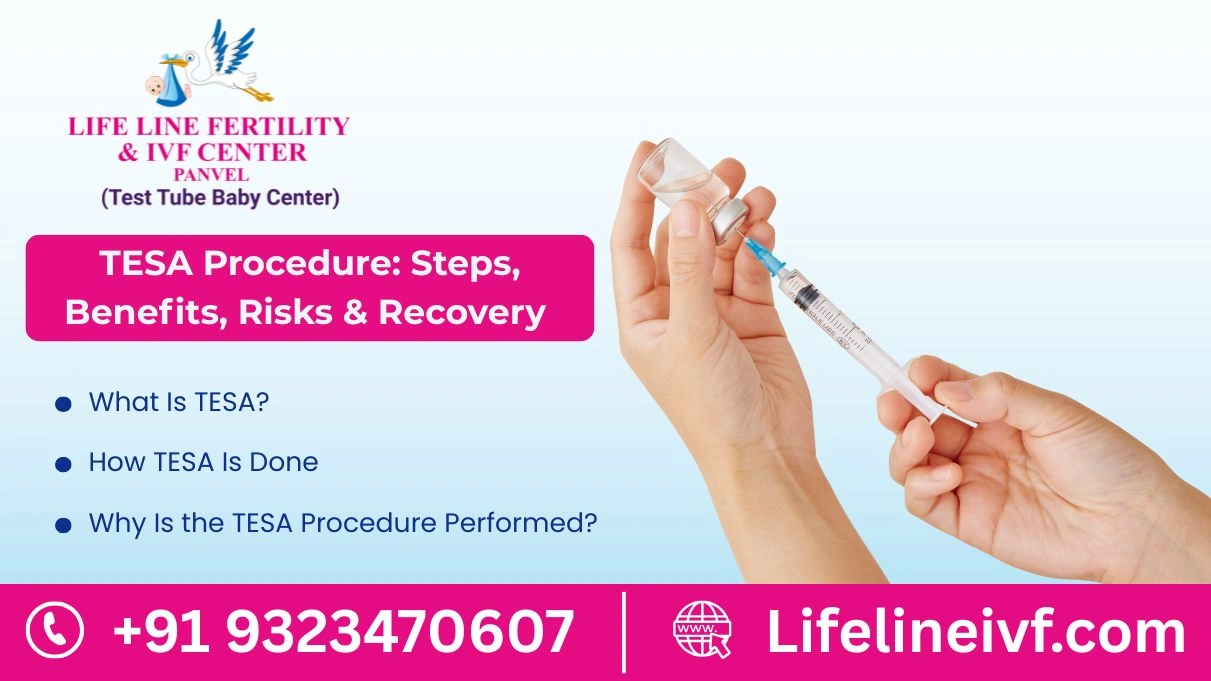
Infertility can be an emotional challenge, and when the cause lies in male reproductive issues, advanced medical techniques like the TESA procedure (Testicular Sperm Aspiration) offer real hope. This minimally invasive method retrieves sperm directly from the testes, helping couples conceive through assisted reproductive treatments such as IVF or ICSI.
This blog explains what the TESA procedure is, how it’s done, its benefits, recovery time, and how it differs from other fertility treatments.
What Is TESA?
TESA (Testicular Sperm Aspiration) is a medical procedure used to extract sperm directly from testicular tissue in men with little or no sperm in their semen — a condition known as azoospermia. It’s performed under local anesthesia with a fine needle, allowing sperm retrieval even when natural ejaculation is not possible.
The collected sperm is then used in IVF or ICSI to help achieve fertilization and pregnancy.
How TESA Is Done
The TESA procedure is simple, safe, and quick — usually completed within 15 to 30 minutes.
Step-by-Step Process
- Preparation: The area is numbed using local anesthesia.
- Aspiration: A fine needle is inserted into the testis to collect tissue containing sperm.
- Laboratory Analysis: Specialists process the sample to isolate viable sperm for use in IVF or ICSI.
- Storage: If not used immediately, the sperm can be frozen (cryopreserved) for future cycles.
TESA is performed on an outpatient basis, so patients can usually go home the same day.
What Is the TESA Procedure, and How Does It Work?
The TESA procedure works by retrieving sperm directly from the testicles when semen samples show no sperm. These retrieved sperm cells are often immature, so they’re used for ICSI (Intracytoplasmic Sperm Injection), where a single sperm is injected into an egg for fertilization.
This procedure provides an effective solution for male infertility, especially when other methods of sperm collection aren’t possible.
Why Is the TESA Procedure Performed?
Doctors recommend TESA when sperm are absent in semen due to:
- Obstructive azoospermia (blockage in the reproductive tract)
- Non-obstructive azoospermia (poor sperm production)
- Previous vasectomy or failed reversal
- Hormonal or genetic conditions affecting sperm production
TESA helps men achieve biological fatherhood, even when natural sperm release isn’t possible.
Advantages of TESA
The TESA procedure has several key benefits:
- Minimally invasive and requires only local anesthesia
- Quick procedure and recovery
- No stitches or visible scarring
- Suitable even for severe cases of azoospermia
Allows fresh or frozen sperm use in IVF/ICSI
Complications of TESA
Though safe, some mild and temporary side effects may occur, such as:
- Slight pain, swelling, or bruising in the testicular area
- Minor discomfort for 1–2 days
- Rarely, infection or tenderness
Most patients recover fully with rest and mild pain medication.
Who Can Benefit from TESA?
TESA is ideal for:
- Men with azoospermia (no sperm in semen)
- Those with blocked sperm ducts or previous vasectomy
- Patients with failed ejaculation or low sperm motility
Couples planning ICSI where sperm quality is low
TESA-IVF: Success Rates and Benefits
Combining TESA with IVF/ICSI increases the chances of conception for couples facing male infertility. On average, pregnancy success rates using TESA-retrieved sperm range from 40% to 60%, depending on sperm quality, egg health, and female age.
This makes TESA an important option for achieving successful fertilization even in challenging cases.
TESA Procedure: Side Effects and Recovery Time
Potential Side Effects
- Mild soreness or tenderness near the testis
- Temporary redness or bruising
Rare infection or swelling
Recovery Time
Most men recover in 24–48 hours. Doctors advise avoiding heavy physical activity, exercise, or sexual intercourse for about a week to ensure complete healing.
TESA vs. Other Fertility Treatment Options
TESA vs. PESA (Percutaneous Epididymal Sperm Aspiration)
- TESA retrieves sperm directly from the testis.
- PESA collects sperm from the epididymis (the tube near the testis).
TESA is preferred for cases of poor sperm production rather than blocked sperm pathways.
TESA vs. IVF with Ejaculated Sperm
- IVF uses sperm collected through ejaculation.
- TESA-IVF uses sperm directly retrieved from the testes when ejaculation yields no sperm.
TESA ensures biological parenthood is still possible for men with zero sperm count.
How Long Does TESA Treatment Take?
The TESA procedure takes about 15–30 minutes and requires a few hours of observation before discharge. Patients typically return to normal routines within 1–2 days, depending on individual recovery.
Potential Risks and Complications of TESA
Complications are uncommon but may include:
- Mild swelling or bruising
- Temporary pain in the testicular area
- Rare infection
An experienced fertility specialist minimizes these risks and ensures smooth recovery.
Why Choose Lifeline IVF Panvel?
At Lifeline IVF Panvel, patients receive compassionate, expert fertility care supported by advanced technology and modern labs. The clinic offers patient-centered, transparent treatment with personalized plans and dedicated support throughout every stage. With a focus on comfort, precision, and long-term reproductive health, Lifeline IVF Panvel helps couples confidently achieve their dream of parenthood.
Conclusion
The TESA procedure is a safe, effective, and minimally invasive solution for men facing infertility challenges. By retrieving sperm directly from the testes, TESA opens the door to parenthood for couples struggling with azoospermia or low sperm count.
With proper medical care and guidance from an experienced fertility team, recovery is quick and success rates are encouraging — offering hope to couples on their fertility journey.
FAQs
Is the TESA procedure painful?
No, it’s done under local anesthesia, so you’ll feel minimal discomfort.
How long does recovery take after TESA?
Most patients recover within one to two days.
Can TESA be repeated if no sperm are found?
Yes, your doctor may repeat it if necessary.
Can TESA sperm be frozen for later IVF use?
Yes, retrieved sperm can be cryopreserved for future IVF/ICSI cycles.
What is the success rate of IVF using TESA sperm?
Success rates generally range between 40%–60%, depending on fertility factors.
Ready to Take the Next Step in Your Fertility Journey?
Get expert support for safe and effective TESA treatment. At Lifeline IVF Panvel, our specialists offer personalized guidance, modern technology, and compassionate care to help you move closer to parenthood.
- Life Line IVF
- November 17, 2025
Ready to take the next step? Let’s begin your journey to parenthood together.

In Vitro Fertilization (IVF)

Intrauterine Insemination (IUI)

ICSI (Intracytoplasmic Sperm Injection)

Male Infertility Evaluation & Treatment

Female Infertility Solutions

Donor Egg and Donor Sperm Programs
Embryo Freezing & Fertility Preservation

Recurrent IVF Failure Consultation
Lifeline IVF Clinic in Panvel
Shivaji Rd, Old Panvel, Panvel, Navi Mumbai, Maharashtra 410206
Lifeline IVF Clinic in Kharghar
B 310 Third Floor, The Pacific, Plot No 229, Block G, Sector 13, Kharghar, Navi Mumbai, Maharashtra 410210
Lifeline IVF Clinic in Vashi
Meena 3rd Floor, Shanti Center Building,
Office no 31, Sector 17,
Vashi, Maharashtra 400703