
Low Sperm Count Signs

Blog Low Sperm Count Signs: What Your Body May Be Indicating Fertility issues are not always easy to spot, especially when it comes to male reproductive health. In many situations, the signs of low sperm count are subtle and can go unnoticed until a couple starts trying to conceive and faces unexpected challenges. Low sperm count, or reduced sperm concentration, can directly affect the chances of pregnancy. Being aware of the early signs can make a real difference, as it allows timely medical attention and better treatment outcomes. At Lifeline Fertility & IVF Center, the approach focuses on early detection and personalized care to guide individuals in the right direction. What Is Low Sperm Count? Low sperm count refers to a condition where the number of sperm present in semen is lower than normal, which may reduce the chances of fertilization. It is one of the common causes of male infertility and can be influenced by factors such as hormonal imbalance, medical conditions, or lifestyle habits. What makes it challenging is that many men do not experience clear symptoms initially. As a result, it is often identified only after difficulty in conceiving. This is why early evaluation and awareness play such an important role. Low Sperm Count Signs The signs of low sperm count can differ from person to person. While some men may not notice anything unusual, others may experience certain physical or hormonal changes that indicate an underlying issue. Difficulty in Conceiving One of the most common indicators is difficulty achieving pregnancy despite regular, unprotected intercourse over a period of time. This is often the first reason couples seek medical advice. Concerned about low sperm count signs? Talk to a fertility specialist today and get the right guidance. Book An Appointment Changes in Sexual Health A decrease in sexual desire, difficulty maintaining an erection, or problems with ejaculation can sometimes be linked to hormonal imbalances that also affect sperm production. Pain or Swelling in Testicles Any discomfort, swelling, or heaviness in the testicular area should not be ignored, as it may be associated with conditions that impact sperm health. Signs of Hormonal Imbalance Symptoms such as low energy levels, reduced body or facial hair, or changes in muscle mass may suggest hormonal changes affecting fertility. Changes in Semen Quality Noticing differences in semen volume, thickness, or overall appearance can sometimes indicate issues with sperm count or quality. Common Causes of Low Sperm Count Low sperm count can occur due to a mix of medical and lifestyle factors. Conditions like varicocele, infections, or blockages in the reproductive tract can interfere with sperm production. Lifestyle habits also play a significant role. Smoking, alcohol consumption, stress, obesity, and exposure to harmful substances can all affect sperm health. Identifying the exact cause is essential for choosing the right treatment path. When Should You See a Doctor? If you and your partner have been trying to conceive for over a year without success, it is a good idea to consult a specialist. You should also seek medical advice if you notice symptoms such as testicular discomfort, sexual health issues, or signs of hormonal imbalance. Early consultation allows for quicker diagnosis and improves the chances of successful treatment. Addressing the issue at the right time can prevent further complications. How Is Low Sperm Count Diagnosed and Treated? Diagnosis usually begins with a detailed medical history and physical examination, followed by tests such as semen analysis and hormone evaluation. In some cases, additional imaging or specialized tests may be required. Treatment depends on the underlying cause. It may include medication, lifestyle changes, or surgical procedures. In certain cases, advanced options like IVF may be recommended to improve the chances of conception. Why Choose Lifeline Fertility & IVF Center? At Lifeline Fertility & IVF Center, care is designed around each individual’s needs. The process begins with a thorough evaluation to understand the root cause of the issue, followed by a treatment plan that is tailored accordingly. With experienced specialists, advanced diagnostic tools, and modern fertility treatments, the center ensures a balanced approach that combines medical expertise with compassionate support. From the first consultation to ongoing care, patients are guided at every step, helping them feel informed and confident throughout their journey. Conclusion Low sperm count signs are often easy to overlook, but paying attention to subtle changes can help in early detection and timely treatment. Taking action at the right time can improve both fertility outcomes and overall reproductive health. At Lifeline Fertility & IVF Center, the focus is on providing expert care, clear guidance, and personalized treatment to support individuals at every stage of their fertility journey. FAQ’s What are the early signs of low sperm count? Common signs include difficulty conceiving, reduced sex drive, testicular discomfort, and noticeable changes in semen. Can low sperm count be treated? Yes, many cases can be effectively managed once the underlying cause is identified. Does low sperm count always cause infertility? Not always, but it can lower the chances of conception and may require medical support. Can lifestyle affect sperm count? Yes, habits like smoking, alcohol use, stress, and poor diet can significantly impact sperm health. When should I get tested for low sperm count? If pregnancy has not occurred after a year of trying, it is advisable to consult a specialist. Common signs include difficulty conceiving, reduced sex drive, testicular discomfort, and noticeable changes in semen. Yes, many cases can be effectively managed once the underlying cause is identified. Not always, but it can lower the chances of conception and may require medical support. Yes, habits like smoking, alcohol use, stress, and poor diet can significantly impact sperm health. If pregnancy has not occurred after a year of trying, it is advisable to consult a specialist. Worried about fertility issues? Get expert consultation for low sperm count and take the next step with confidence. Book An Appointment
IVF Treatment Cost

Blog IVF Treatment Cost: What You Should Expect When couples begin their fertility journey, one of the first concerns that comes to mind is the ivf treatment cost. It is not just about the procedure itself but also about understanding what goes into the total expense and how different factors influence it. In India, IVF has become more accessible over the years, but costs can still vary significantly depending on several medical and non-medical aspects. Having a clear idea of pricing helps you plan better, both emotionally and financially. What Does IVF Treatment Cost Include? The ivf treatment cost is not a single fixed number because it includes multiple stages of treatment. Each step contributes to the final price. Typically, IVF treatment involves ovarian stimulation, egg retrieval, fertilization in a lab, embryo transfer, and follow-up care. Along with these, diagnostic tests, medications, and consultations are also included. In many cases, patients assume that the quoted price covers everything. However, additional procedures like ICSI (Intracytoplasmic Sperm Injection), embryo freezing, or genetic testing may increase the total cost. Average IVF Treatment Cost in India In India, the ivf treatment cost usually ranges between ₹1,20,000 to ₹2,50,000 per cycle. This is a general estimate and may differ depending on the clinic, technology used, and patient condition. Metro cities like Mumbai, Delhi, and Bangalore often have slightly higher costs due to advanced infrastructure and experienced specialists. On the other hand, smaller cities may offer lower pricing but with varying facilities. It’s important to note that some couples may require more than one IVF cycle, which can increase the overall investment. Factors That Affect IVF Treatment Cost The total ivf treatment cost is influenced by multiple factors. Understanding these helps you avoid unexpected expenses. Want to know the actual cost of IVF treatment? Speak to a specialist now! Book An Appointment Medical Condition of the Patient Every fertility case is unique. Age, hormonal health, ovarian reserve, and underlying conditions directly impact the treatment plan. More complex cases may require additional procedures, increasing the cost. Number of IVF Cycles Success is not always guaranteed in the first attempt. Some couples may need multiple cycles, which significantly adds to the total expense. Medications and Hormonal Injections Fertility medications play a crucial role in IVF success. These drugs can vary in cost depending on dosage and duration. Additional Procedures Techniques like ICSI, embryo freezing, blastocyst culture, or genetic testing (PGT) are often recommended in certain cases. These are usually charged separately. Additional Procedures Clinics with advanced labs, modern equipment, and experienced fertility specialists may charge higher fees, but they often offer better success rates. IVF Treatment Cost in Mumbai In Mumbai, the ivf treatment cost typically ranges between ₹1,50,000 to ₹3,00,000 per cycle. The variation depends on the clinic’s reputation, success rates, and the complexity of the treatment. Many fertility centers in Mumbai provide customized packages, which may include consultations, basic tests, and embryo transfer. However, patients should always confirm what is included in the package to avoid confusion later. Are There Any Hidden Costs? While discussing the ivf treatment cost, transparency is extremely important. Some clinics may advertise lower prices but exclude essential components. Common additional expenses include: Blood tests and scans Advanced fertility procedures Embryo freezing and storage Donor eggs or sperm (if required) Follow-up consultations Before starting treatment, always ask for a detailed cost breakdown. This ensures better financial planning and avoids surprises during the process. Ways to Manage IVF Treatment Cost Planning for the ivf treatment cost becomes easier when you are aware of available options. Many clinics now offer EMI plans or flexible payment options. Some also provide package deals for multiple cycles, which can reduce the overall cost per attempt. Additionally, checking insurance coverage (if applicable) or employer benefits can help ease the financial burden. Does Higher Cost Mean Better Success? A common misconception is that a higher ivf treatment cost guarantees better results. While advanced technology and experienced doctors do play a role, success also depends on individual medical factors. Choosing a clinic should be based on success rates, transparency, and patient care rather than just pricing. A balanced approach ensures both quality treatment and financial comfort. Why Choose Lifeline IVF Choosing the right fertility center plays a crucial role in your journey, especially when evaluating the ivf treatment cost alongside success rates and care quality. Lifeline IVF stands out by offering a balanced approach that focuses on both affordability and advanced medical support. At Lifeline IVF, patients receive personalized treatment plans tailored to their specific fertility needs. This ensures that you are not paying for unnecessary procedures while still getting the most effective care. The clinic emphasizes transparency, providing a clear breakdown of the ivf treatment cost, so you can plan your finances with confidence. The center is equipped with modern technology and follows advanced fertility protocols, which can positively impact treatment outcomes. Along with this, experienced fertility specialists and a supportive medical team guide patients through every stage of the process, making the experience less stressful. Another important aspect is patient-centric care. Lifeline IVF focuses on maintaining comfort, privacy, and emotional support throughout the treatment journey. This combination of affordability, transparency, and quality care makes it a reliable choice for couples considering IVF. Why Choose Lifeline IVF The ivf treatment cost is a significant factor in your fertility journey, but it should not be the only deciding element. A well-informed approach helps you balance cost, quality, and success chances effectively. By understanding what is included, what affects pricing, and how to plan financially, you can move forward with clarity and confidence. IVF is not just a medical procedure—it’s a step toward building your family, and proper planning makes the journey smoother. What is the minimum IVF treatment cost in India? The ivf treatment cost in India generally starts from around ₹1,20,000 per cycle, depending on the clinic and basic procedures involved. Does IVF cost include medicines? In most cases, medicines are not fully included in the base package
Hormone Test for Women – When and Why It Is Recommended

Blog Hormone Test for Women – When and Why It Is Recommended Hormones play a key role in a woman’s overall health. From regulating periods and supporting fertility to influencing mood and energy levels, many important body functions depend on balanced hormones. Sometimes, subtle changes like irregular cycles, mood swings, or unexpected weight changes can point toward a possible imbalance. In such situations, doctors may recommend a hormone test. It’s a simple and useful way to get a clearer picture of what’s happening inside the body. By checking hormone levels, it becomes easier to identify whether everything is functioning normally or if something needs attention. Getting tested at the right time can help detect issues early and make treatment more manageable. What Is a Hormone Test for Women? A hormone test is usually done through a blood sample to measure the levels of different hormones in the body. It helps doctors assess whether hormonal levels are within the normal range or if there are any imbalances that need further evaluation. Some of the commonly checked hormones in women include estrogen, progesterone, thyroid hormones, prolactin, and FSH. The exact tests depend on the symptoms and the reason for testing, as each case is different and may require a specific approach. When Should a Hormone Test Be Done? Irregular Periods or Fertility Concerns If periods are not regular or if someone is trying to conceive but facing difficulties, a hormone test can help identify the underlying cause. It provides useful insights into ovulation and reproductive health, which are important for planning pregnancy. Unexplained Body Changes Changes like sudden weight gain or loss, frequent mood swings, hair fall, or skin issues can sometimes be linked to hormone levels. In such cases, testing helps determine whether these symptoms are related to hormonal imbalance. Common Hormone Tests for Women Reproductive Hormone Tests Hormones like estrogen, progesterone, FSH, and LH are tested to evaluate menstrual cycle patterns, ovulation, and overall fertility health. These tests are often recommended when there are concerns related to periods or conception. Curious about hormone tests for women? Consult a specialist today! Book An Appointment Thyroid and Other Hormone Tests Thyroid function tests help assess metabolism, energy levels, and overall body balance. Prolactin levels may also be checked in certain conditions related to reproductive health, giving a more complete picture of hormonal function. How Is a Hormone Test Done? Blood Test and Timing The test involves collecting a small blood sample, usually from a vein in the arm. In some cases, the timing of the test is important, especially for reproductive hormones, and may be scheduled according to the menstrual cycle. Report and Medical Guidance Once the reports are ready, the doctor reviews the hormone levels and explains what they indicate. Based on the results, further treatment, lifestyle adjustments, or additional tests may be recommended. Why Choose Lifeline Fertility & IVF Center Panvel? At Lifeline Fertility & IVF Center Panvel, hormone testing and fertility care are handled with a patient-focused approach. Each case is evaluated carefully before suggesting tests or treatment. With experienced specialists and modern diagnostic facilities, patients are guided clearly at every step, making the process easier to understand and less stressful. Conclusion Hormone testing plays an important role in understanding women’s health, especially when there are symptoms like irregular periods, fertility challenges, or other noticeable changes. It helps identify the cause and allows timely and appropriate care. Listening to your body and seeking medical advice when something feels off can make a big difference. Early detection often leads to better management and improved overall health. When should a hormone test be done? A hormone test is usually advised when there are symptoms such as irregular periods, difficulty in conceiving, or noticeable changes in mood, weight, or skin. These signs may indicate a hormonal imbalance that needs evaluation. Is a hormone test painful? It is a simple blood test, so there may be slight discomfort during the needle prick. However, the procedure is quick and generally easy to manage. Is fasting required for a hormone test? Fasting is not required for all hormone tests. It depends on the specific test being done, and the doctor or lab will guide you accordingly. Can hormonal imbalance be treated? Yes, hormonal imbalance can often be managed effectively with the right diagnosis. Treatment may include medications, lifestyle changes, or other therapies based on the underlying cause. Is a hormone test useful for pregnancy planning? Yes, hormone testing is an important part of fertility evaluation. It helps assess ovulation and overall reproductive health, which are important for planning pregn A hormone test is usually advised when there are symptoms such as irregular periods, difficulty in conceiving, or noticeable changes in mood, weight, or skin. These signs may indicate a hormonal imbalance that needs evaluation. It is a simple blood test, so there may be slight discomfort during the needle prick. However, the procedure is quick and generally easy to manage. Fasting is not required for all hormone tests. It depends on the specific test being done, and the doctor or lab will guide you accordingly. Yes, hormonal imbalance can often be managed effectively with the right diagnosis. Treatment may include medications, lifestyle changes, or other therapies based on the underlying cause. Yes, hormone testing is an important part of fertility evaluation. It helps assess ovulation and overall reproductive health, which are important for planning pregn Understand when and why hormone tests are important for women Book An Appointment
ICSI Full Form – What It Means and When It Is Recommended
Blog ICSI Full Form – What It Means and When It Is Recommended When couples begin looking into fertility treatments, they often come across terms that sound a bit complicated at first. One such term is ICSI. It’s something many people hear during IVF discussions, but not everyone clearly understands what it actually means or when it is used. ICSI is a commonly used technique in fertility treatment, especially when there are issues related to sperm quality or fertilization. In simple words, it helps improve the chances of fertilization by assisting the process in a very precise way. Knowing what ICSI stands for and how it works can make the whole treatment journey feel a little less confusing and a bit more manageable. What Is the Full Form of ICSI? ICSI stands for Intracytoplasmic Sperm Injection. It is a specialized procedure used as part of IVF (In Vitro Fertilization). In this process, a single healthy sperm is directly injected into an egg to help fertilization happen. Normally, sperm has to reach and enter the egg on its own. But in ICSI, this step is assisted by specialists, which can be helpful in certain fertility conditions. How Does the ICSI Procedure Work? ICSI is done in a controlled lab environment as part of the IVF process. Egg Retrieval First, eggs are collected from the ovaries after proper stimulation. This is usually done through a minor procedure under medical care. Sperm Selection A healthy and active sperm is carefully chosen by the embryologist using advanced lab techniques. Direct Injection into the Egg The selected sperm is then injected directly into the egg using a very fine needle under a microscope. When Is ICSI Recommended? ICSI is generally suggested in situations where natural fertilization may be difficult. Low Sperm Count or Poor Sperm Quality If the sperm count is low or movement is not strong enough, ICSI can help improve fertilization chances. Curious about ICSI in fertility treatment? Consult a specialist today! Book An Appointment Previous IVF Failure If fertilization did not happen in a previous IVF cycle, doctors may recommend ICSI in the next attempt. Blocked or Absent Sperm Pathways In cases where sperm cannot reach the egg naturally due to blockage, ICSI helps by directly assisting the process. Benefits of ICSI in Fertility Treatment ICSI has become an important option in fertility care today. Higher Chances of Fertilization Since the sperm is directly injected into the egg, it may increase the chances of successful fertilization in certain cases. Useful in Male Factor Infertility ICSI is especially helpful when fertility issues are related to sperm quality or count. Controlled and Precise Process The entire procedure is done in a controlled lab setting, allowing specialists to closely monitor each step. What to Expect After the ICSI Procedure Once fertilization is done, the process continues as part of IVF. Embryo Development The fertilized egg starts developing into an embryo over the next few days. Embryo Development A healthy embryo is then placed into the uterus. Pregnancy Testing After some time, tests are done to check whether the procedure has resulted in pregnancy. What to Expect After the ICSI Procedure Lifeline Fertility & IVF Center Panvel focuses on providing personalized fertility care using modern treatment methods. The team takes time to understand each couple’s situation and plans treatment accordingly. With experienced specialists and advanced lab support, patients are guided at every step—from diagnosis to treatment and follow-up—so they feel more comfortable and informed throughout the process. Conclusion ICSI, or Intracytoplasmic Sperm Injection, is an advanced fertility technique that helps improve the chances of fertilization, especially when natural conception becomes difficult. By directly assisting the fertilization process, ICSI has become a widely used part of modern IVF treatments. Having a basic understanding of how it works and when it is recommended can help couples feel more prepared while exploring fertility options. What is the full form of ICSI? ICSI stands for Intracytoplasmic Sperm Injection. Is ICSI the same as IVF? Not exactly. ICSI is a technique used within the IVF process during the fertilization stage. Is the ICSI procedure painful? The injection process itself is done in the lab, so it isn’t painful. Egg retrieval is done under medical supervision to keep the patient comfortable. Who should consider ICSI treatment? It is often suggested for couples facing male factor infertility or those who had fertilization issues in previous IVF cycles. What is the success rate of ICSI? The success rate can vary depending on age, health, and the specific fertility condition. ICSI stands for Intracytoplasmic Sperm Injection. Not exactly. ICSI is a technique used within the IVF process during the fertilization stage. The injection process itself is done in the lab, so it isn’t painful. Egg retrieval is done under medical supervision to keep the patient comfortable. It is often suggested for couples facing male factor infertility or those who had fertilization issues in previous IVF cycles. The success rate can vary depending on age, health, and the specific fertility condition. Understand ICSI in simple terms with expert insights Book An Appointment
Donor Egg IVF Cost in India: Price & Factors

Blog Donor Egg IVF Cost in India: Complete Price Breakdown Thinking about IVF can already feel overwhelming, and when donor eggs come into the picture, one of the first things people worry about is the cost. It’s honestly a valid concern. Treatments like these are not just emotional decisions, they also need proper financial planning. The donor egg IVF cost in India is not exactly fixed. It changes from case to case, clinic to clinic. Some couples end up spending less, while others may need to stretch their budget a bit more depending on their situation. But let’s break it down in a simple way so you get a clear idea of what to expect. What is donor egg IVF and how does it work? In simple words, donor egg IVF is used when a woman’s own eggs are not suitable for pregnancy. So instead, eggs from a healthy donor are used. These eggs are fertilized in the lab and then placed in the uterus. The process sounds straightforward, but there are quite a few steps involved behind the scenes — selecting a donor, medical tests, fertilization, and then embryo transfer. Usually, doctors suggest this option in cases where age, low egg quality, or repeated IVF failures are involved. How much is donor egg IVF cost in India? Now coming to the main part. The donor egg IVF cost in India usually falls somewhere between ₹3,00,000 to ₹6,50,000 for one cycle. Yes, that’s a wide range… and that’s because no two cases are exactly the same. In cities like Mumbai or Delhi, the cost can be slightly on the higher side. Smaller cities might offer lower prices, but again, it depends on the clinic and facilities they provide. Also, sometimes what looks cheaper in the beginning may end up costing more later if additional procedures are needed. Why does donor egg IVF cost more than regular IVF? A lot of people wonder this. Why is it more expensive than normal IVF? The simple reason is — there’s another person involved (the donor), and that adds multiple extra steps to the whole process. What actually adds to the cost? There are several things happening in the background: Proper screening and testing of the donor Medical procedures to retrieve eggs Compensation and legal processes Lab fertilization (sometimes ICSI is used) Medicines for both donor and recipient Monitoring and follow-ups So yes, when you look at all of this together, the cost naturally goes up. What factors affect donor egg IVF cost in India? This is where things can vary a lot. First, the clinic you choose matters. A well-established fertility center with good success rates may charge more, but many couples feel it’s worth it. Then comes the donor profile. Some donors go through more detailed screening, which can increase the cost slightly. Another thing people don’t always consider is the number of cycles. Not everyone gets success in the first attempt, and if more cycles are needed, the total cost increases. Also, add-ons like genetic testing or embryo freezing can quietly increase your final bill. What is included in donor egg IVF cost? Most clinics will give you a package, but what’s inside that package can differ. Generally, it includes donor selection, egg retrieval, fertilization, and embryo transfer. Basic medicines and regular check-ups are also part of it in many cases. But here’s where you need to be careful — not everything is always included. Some treatments or tests might be charged separately. It’s always better to ask clearly in advance, so there are no surprises later. Is donor egg IVF cost different in various cities? Yes, quite a bit actually. In metro cities like Mumbai, Delhi, or Bangalore, the cost is usually higher. This is mainly because of better infrastructure and experienced doctors. At the same time, cities like Chennai or Hyderabad may offer similar treatments at a slightly lower cost. So, it’s not just about price… it’s about where you feel comfortable and confident with the treatment. Worried about donor egg IVF cost? Talk to our fertility specialists today and get a clear estimate based on your condition. Book An Appointment Who should consider donor egg IVF? This treatment is not for everyone, but in some cases, it can really make a difference. Women above 40 often consider this option because egg quality declines with age. It’s also suggested for women with low ovarian reserve or those who have gone through multiple unsuccessful IVF cycles. Some couples also choose donor eggs to avoid passing on genetic conditions. At the end of the day, it depends on individual medical advice. What is the success rate of donor egg IVF? One of the biggest reasons couples go for this option is the higher success rate. Since donor eggs usually come from younger, healthy individuals, the chances of pregnancy are better compared to regular IVF in certain cases. On average, success rates can be around 50% to 70% per cycle. But again, it depends on many things like overall health and how the body responds to treatment. Is donor egg IVF safe and legal in India? Yes, it is both safe and legal when done through proper channels. There are strict rules in place to ensure ethical practices. Donors are screened carefully, and clinics are required to follow guidelines. So as long as you’re choosing a registered and trusted clinic, safety shouldn’t be a concern. Why choose Lifeline IVF for donor egg IVF treatment? When it comes to something this important, the clinic you choose really matters. Lifeline IVF focuses on giving patients a more personal experience rather than just a standard process. The team takes time to guide couples, which honestly makes a big difference during such an emotional journey. They also maintain transparency in pricing and follow proper screening protocols for donors. That kind of clarity helps patients feel a bit more at ease. Conclusion So, when you look at the donor egg IVF cost, it’s not just about
IVF Cost in Mumbai: Price, Factors & Success

Blog IVF Cost in Mumbai: Complete Price Breakdown Is IVF really around ₹1 lakh, or can it go beyond ₹3 lakh? If you’re unsure about what to expect, you’re definitely not the only one. When people start thinking about IVF, cost is usually the first thing that hits their mind. And honestly, it makes sense… it’s not something small or casual, it’s a big step both emotionally and financially. The ivf cost in mumbai is something that doesn’t come with one fixed number. You’ll hear different amounts from different places and that can get confusing. Some clinics say one thing, someone you know might tell another story. So instead of just throwing numbers, let’s talk about it in a simple, real way… what actually affects the cost and what you should expect. What is IVF treatment and how does it work? IVF, in simple terms, is when fertilization happens outside the body. Eggs and sperm are combined in a lab, and once an embryo is formed, it is placed back into the uterus. Sounds easy when said like this, but the process itself has multiple steps. There are injections, scans, egg retrieval, then fertilization, and then transfer. Most couples don’t jump to IVF directly. It’s usually suggested when other options haven’t worked or when there’s a clear medical reason. How much is IVF cost in Mumbai? Coming to the main thing… the ivf cost in mumbai usually falls between ₹1,20,000 to ₹3,00,000 for one cycle. But yeah, that’s not the final number always. In many cases, it can go higher. Why? Because every case is different. Some people may need extra medications, some might need advanced procedures. Even the clinic you choose can change the price quite a bit. So if someone tells you a fixed cost without knowing your case, it’s not the full picture. Why does IVF cost vary so much? This is something people get confused about a lot. Why such a big gap in pricing? The simple answer is — IVF is not the same for everyone. One person’s body may respond quickly, another might take more time. Some may need only basic treatment, while others may require extra support or procedures. What actually changes the cost? There are a few things behind it: Age plays a role Hormone levels and overall health Doctor’s experience Technology used in the clinic How many cycles are needed Even small differences in these can increase or decrease the cost. What is included in IVF cost in Mumbai? Most clinics offer a package, but what’s inside that package can be different. Usually, it includes consultation, basic tests, injections for stimulation, egg retrieval, fertilization, and embryo transfer. But one thing people often miss… medicines are not always fully included. Some clinics charge them separately. So it’s always better to ask clearly, otherwise later it feels like “this was not told before”. Are there any additional costs involved? Yes, and this part surprises many people. Apart from the main IVF cycle, there are other things that might be needed depending on your case. For example, ICSI (which is a more advanced fertilization method), embryo freezing, or genetic testing. These are usually not part of the basic package. Also, if a frozen embryo transfer is done later, that again adds to the cost. So overall, the final amount can be more than what you initially expected. Is IVF cost in Mumbai higher than other cities? In most cases, yes. Mumbai is a metro city, so costs are naturally a bit higher. Clinics here usually have better technology and experienced doctors, and that reflects in pricing too. But at the same time, many people prefer Mumbai because they feel more confident about the treatment quality. Confused about IVF cost in Mumbai? Talk to our experts today and get a clear estimate for your treatment. Book An Appointment How many IVF cycles are usually needed? This is something no one can promise. Some couples get success in the first cycle itself, which is great. But for others, it may take two or even three attempts. And since each cycle has its own cost, the total expense increases. Doctors usually prepare you for this possibility, just so you’re mentally and financially ready. What is the success rate of IVF in Mumbai? Success rate is another thing people always ask about. On average, it’s somewhere between 40% to 60% per cycle. But again, this is not the same for everyone. Younger patients usually have better chances. Health condition and the clinic you choose also matter a lot. So it’s not just about numbers… it’s about your overall situation. Is IVF affordable for most couples? To be honest, IVF is not cheap. That’s the reality. But many couples still go for it because of what it offers — a chance to have a child. Some clinics do provide flexible payment options or packages, which helps a bit. Planning in advance also makes a big difference. Who should consider IVF treatment? IVF is usually suggested when there are specific fertility issues. Like blocked fallopian tubes, low sperm count, unexplained infertility, or when other treatments haven’t worked. Age is also a factor. As fertility declines with time, IVF becomes a more suitable option for many couples. Why choose Lifeline IVF for treatment in Mumbai? Choosing a clinic is not just about cost. It’s also about trust and comfort. Lifeline IVF focuses more on personalized care. They don’t just follow a fixed process for everyone, which actually matters a lot in treatments like this. They also keep things clear when it comes to pricing, so patients are not left guessing later. That transparency makes the whole experience a bit less stressful. Conclusion So yeah, the ivf cost in mumbai is not just one number you can Google and be done with. It depends on many things, and every journey is a bit different. At first, it might feel like a lot… but for many couples, it’s a step they are
Infertility Meaning in Hindi: बांझपन का मतलब, कारण, लक्षण और इलाज

Blog Infertility Meaning in Hindi | बांझपन का अर्थ, कारण, लक्षण और उपचार Infertility का मतलब क्या होता है? (Infertility Meaning in Hindi) Infertility की सरल परिभाषा Infertility का मतलब है लंबे समय तक नियमित रूप से बिना किसी गर्भनिरोधक के संबंध बनाने के बाद भी गर्भधारण न होना। आमतौर पर डॉक्टर इसे तब Infertility मानते हैं जब एक साल तक प्रयास करने के बाद भी महिला गर्भवती नहीं हो पाती। हालांकि, अगर महिला की उम्र 35 साल से अधिक हो, तो डॉक्टर लगभग 6 महीने तक प्रयास के बाद ही जांच कराने की सलाह देते हैं। क्योंकि उम्र बढ़ने के साथ गर्भधारण की संभावना धीरे-धीरे कम होने लगती है। मेडिकल भाषा में Infertility क्या है मेडिकल भाषा में Infertility को एक ऐसी स्थिति माना जाता है जिसमें पुरुष या महिला की प्रजनन क्षमता प्रभावित हो जाती है। इसका मतलब यह है कि शरीर में गर्भधारण के लिए जरूरी प्रक्रियाओं में कहीं न कहीं समस्या आ रही है। पुरुष और महिला Infertility में अंतर पुरुष Infertility आमतौर पर शुक्राणुओं की संख्या कम होने, उनकी गुणवत्ता कमजोर होने या उनकी गति (Motility) कम होने के कारण होती है। इसके अलावा हार्मोनल समस्या, संक्रमण या कुछ जीवनशैली से जुड़े कारण भी पुरुषों की प्रजनन क्षमता को प्रभावित कर सकते हैं। वहीं महिला Infertility अक्सर अंडोत्सर्जन की समस्या, फेलोपियन ट्यूब में रुकावट, हार्मोनल असंतुलन या गर्भाशय से जुड़ी किसी समस्या के कारण हो सकती है। कुछ महिलाओं में PCOS, एंडोमेट्रियोसिस या थायरॉयड जैसी समस्याएं भी गर्भधारण में बाधा बन सकती हैं। Infertility कितने प्रकार की होती है? Primary Infertility क्या है Primary Infertility उस स्थिति को कहा जाता है जब किसी दंपति को शादी के बाद लंबे समय तक कोशिश करने के बावजूद कभी भी गर्भधारण नहीं होता। यानी महिला पहले कभी गर्भवती नहीं हुई होती। आमतौर पर अगर एक साल तक बिना किसी गर्भनिरोधक के नियमित संबंध बनाने के बाद भी गर्भधारण नहीं होता, तो डॉक्टर इसे Primary Infertility मानते हैं। इसके पीछे कई कारण हो सकते हैं, जैसे हार्मोनल असंतुलन, अंडोत्सर्जन में समस्या, शुक्राणुओं की कमी या प्रजनन अंगों से जुड़ी कोई स्वास्थ्य समस्या। Secondary Infertility क्या होती है Secondary Infertility उस स्थिति को कहा जाता है जब दंपति को पहले कभी गर्भधारण हो चुका हो, लेकिन बाद में दोबारा गर्भधारण करने में समस्या आने लगे। उदाहरण के लिए, अगर किसी महिला को पहले बच्चा हो चुका है लेकिन अब लंबे समय तक कोशिश करने के बाद भी दोबारा गर्भ नहीं ठहर रहा है, तो इसे Secondary Infertility कहा जाता है। इसके पीछे उम्र बढ़ना, हार्मोनल बदलाव, स्वास्थ्य संबंधी समस्याएं या जीवनशैली से जुड़े कारण जिम्मेदार हो सकते हैं। Male Infertility क्या है जब गर्भधारण न होने का कारण पुरुष से जुड़ा होता है, तो उसे Male Infertility कहा जाता है। यह समस्या अक्सर शुक्राणुओं की संख्या कम होने, उनकी गुणवत्ता कमजोर होने या उनकी गति कम होने के कारण होती है। Female Infertility क्या है जब गर्भधारण में समस्या का कारण महिला के शरीर से जुड़ा होता है, तो उसे Female Infertility कहा जाता है। यह समस्या अक्सर अंडोत्सर्जन (Ovulation) में गड़बड़ी, फेलोपियन ट्यूब में रुकावट, गर्भाशय से जुड़ी समस्या या हार्मोनल असंतुलन के कारण हो सकती है। Infertility के मुख्य कारण महिलाओं में Infertility के कारण महिलाओं में Infertility की समस्या कई शारीरिक और हार्मोनल कारणों से हो सकती है। प्रजनन प्रणाली से जुड़ी किसी भी गड़बड़ी का असर गर्भधारण की प्रक्रिया पर पड़ सकता है। हार्मोन असंतुलन: महिलाओं के शरीर में हार्मोन प्रजनन प्रक्रिया में बहुत महत्वपूर्ण भूमिका निभाते हैं। अगर शरीर में हार्मोन का संतुलन बिगड़ जाता है, तो अंडोत्सर्जन (Ovulation) ठीक से नहीं हो पाता। जब अंडा समय पर नहीं बनता या बाहर नहीं निकलता, तो गर्भधारण की संभावना कम हो जाती है। थायरॉयड की समस्या या अन्य हार्मोनल बदलाव भी इस स्थिति को प्रभावित कर सकते हैं। PCOS समस्या: PCOS यानी Polycystic Ovary Syndrome महिलाओं में Infertility का एक सामान्य कारण माना जाता है। इस स्थिति में अंडाशय में छोटे-छोटे सिस्ट बन सकते हैं, जिससे अंडोत्सर्जन नियमित रूप से नहीं हो पाता। PCOS के कारण पीरियड्स अनियमित हो सकते हैं और शरीर में हार्मोन का संतुलन बिगड़ सकता है। इसी वजह से कई महिलाओं को गर्भधारण करने में कठिनाई होती है। फेलोपियन ट्यूब ब्लॉकेज: फेलोपियन ट्यूब वह रास्ता होता है जिसके जरिए अंडा अंडाशय से गर्भाशय तक पहुंचता है। अगर इन ट्यूब्स में रुकावट आ जाए, तो शुक्राणु और अंडा आपस में मिल नहीं पाते। ऐसी स्थिति में गर्भधारण होना मुश्किल हो जाता है। फेलोपियन ट्यूब में ब्लॉकेज कभी-कभी संक्रमण, सर्जरी या अन्य स्वास्थ्य समस्याओं के कारण भी हो सकता है। उम्र का बढ़ना: उम्र बढ़ने के साथ महिलाओं की प्रजनन क्षमता धीरे-धीरे कम होने लगती है। खासकर 35 साल के बाद गर्भधारण की संभावना पहले की तुलना में कम हो सकती है। ऐसा इसलिए होता है क्योंकि उम्र के साथ अंडों की संख्या और उनकी गुणवत्ता दोनों प्रभावित होने लगती हैं। इसी वजह से कई डॉक्टर समय पर परिवार की योजना बनाने की सलाह देते हैं। पुरुषों में Infertility के कारण अक्सर यह माना जाता है कि गर्भधारण न होने की समस्या केवल महिलाओं से जुड़ी होती है, लेकिन ऐसा नहीं है। कई मामलों में Infertility का कारण पुरुषों से भी जुड़ा होता है। कम स्पर्म काउंट: कम स्पर्म काउंट यानी शुक्राणुओं की संख्या सामान्य से कम होना पुरुष Infertility का एक आम कारण है। जब वीर्य में शुक्राणुओं की संख्या कम होती है, तो अंडाणु तक पहुंचकर उसे निषेचित करने की संभावना भी कम हो जाती है। यह समस्या कई कारणों से हो सकती है, जैसे हार्मोनल असंतुलन, कुछ संक्रमण, दवाइयों का असर या गलत जीवनशैली। स्पर्म की कमजोर गुणवत्ता: कई बार शुक्राणुओं की संख्या तो सामान्य होती है, लेकिन उनकी गुणवत्ता अच्छी नहीं होती। इसका मतलब है कि शुक्राणु कमजोर होते हैं या उनकी गति सही नहीं होती। ऐसी स्थिति में शुक्राणु अंडाणु तक पहुंच नहीं पाते या उसे सही तरीके से निषेचित नहीं कर पाते, जिससे गर्भधारण में दिक्कत आ सकती है। हार्मोनल समस्याएं: पुरुषों के शरीर में भी कुछ हार्मोन ऐसे होते हैं जो शुक्राणुओं के निर्माण में महत्वपूर्ण भूमिका निभाते हैं। अगर
Difference Between Surrogacy and IVF: Which Is Better?

Blog Difference Between Surrogacy and IVF: Understanding the Right Fertility Option Many couples dream of having a child, but sometimes medical conditions make it difficult to conceive naturally. Modern fertility treatments have made parenthood possible for many couples facing infertility. Two of the most commonly discussed options are IVF (In Vitro Fertilization) and surrogacy. While these treatments are often mentioned together, they are not the same. Understanding the difference between surrogacy and IVF can help couples make informed decisions about their fertility journey. Both options have helped thousands of families welcome children, but the right choice depends on medical conditions, fertility health, and personal circumstances. Fertility centers like Lifeline IVF guide couples through these options with expert care and advanced reproductive technology. Are IVF and Surrogacy the Same? Many people assume that IVF and surrogacy are the same thing. However, they are two different concepts, although they are sometimes used together in fertility treatment. IVF is a medical procedure that helps fertilization happen outside the body in a laboratory. In this process, doctors collect eggs from the ovaries and fertilize them with sperm to create embryos. These embryos are then transferred into the uterus so that pregnancy can begin. Surrogacy, on the other hand, is a process where another woman carries the pregnancy for the intended parents. In many cases, IVF is used during the surrogacy process to create the embryo that will be transferred to the surrogate mother. In simple terms, IVF is a fertility treatment, while surrogacy is a pregnancy arrangement where another woman carries the baby. In most modern cases, surrogacy is done through IVF treatment, where an embryo created using the parents’ egg and sperm is placed into the surrogate mother’s uterus. Difference Between Surrogacy and IVF The main difference between surrogacy and IVF lies in who carries the pregnancy. In IVF treatment, the intended mother becomes pregnant and carries the baby herself. IVF helps when there are issues with fertilization or when couples need medical assistance to conceive. In surrogacy, the pregnancy is carried by a surrogate mother instead of the intended mother. This option is usually recommended when the intended mother cannot safely carry a pregnancy. Another difference is the medical reason behind choosing each option. IVF is commonly used for fertility problems such as blocked fallopian tubes, ovulation disorders, or male infertility. Surrogacy is typically considered when pregnancy is medically impossible or risky. Understanding these differences helps couples explore the treatment option that best fits their situation. IVF Procedure The IVF procedure involves several medical steps designed to increase the chances of pregnancy. Fertility Evaluation and Preparation Before starting IVF treatment, doctors perform fertility tests to understand the reproductive health of both partners. These tests may include hormone testing, ultrasound scans, and semen analysis. Egg Retrieval and Fertilization During the next stage, eggs are collected from the ovaries using a minor medical procedure. These eggs are then fertilized with sperm in a specialized laboratory to create embryos. Embryo Transfer Once healthy embryos are formed, doctors transfer one or more embryos into the uterus. If the embryo successfully implants, pregnancy begins. The IVF process may take several weeks, and sometimes multiple cycles may be needed to achieve a successful pregnancy. Confused between IVF and surrogacy? Book your consultation with Lifeline IVF experts today. Book An Appointment Surrogacy Procedure The surrogacy procedure involves several medical and legal steps to ensure a safe and ethical process for everyone involved Medical Screening and Consultation Both the intended parents and the surrogate mother undergo detailed medical tests and psychological evaluations before starting the process. This ensures that everyone involved is physically and emotionally prepared. IVF and Embryo Creation Most surrogacy arrangements use IVF technology to create embryos using the intended parents’ egg and sperm. Embryo Transfer to Surrogate After the embryo is created, it is transferred into the surrogate mother’s uterus. If implantation occurs successfully, the surrogate mother carries the pregnancy until the baby is born. Surrogacy requires careful medical monitoring throughout the pregnancy to ensure the health of both the surrogate and the baby. Surrogacy vs IVF: Which Is the Better Option For You? Choosing between surrogacy and IVF depends on the specific medical condition of the couple. For many couples, IVF is the first treatment option because it allows the intended mother to experience pregnancy and childbirth. However, if pregnancy is not possible or safe for the intended mother, doctors may recommend surrogacy. Surrogacy may also be considered in cases of repeated IVF failures or serious uterine conditions. There is no single “better” option for everyone. The best choice depends on medical advice, fertility health, and the couple’s personal circumstances. Factors to Consider When Choosing Between Surrogacy and IVF Medical Conditions Certain medical conditions such as uterine abnormalities, severe health risks, or absence of the uterus may make surrogacy the only option. Fertility Health Doctors evaluate egg quality, sperm health, and reproductive conditions to determine whether IVF alone can help achieve pregnancy. Emotional and Financial Factors Both IVF and surrogacy require emotional preparation and financial planning. Couples should understand the entire process before making a decision. Consulting experienced fertility specialists helps couples choose the safest and most effective treatment option. Why Choose Lifeline IVF? Choosing the right fertility clinic is an important step in the journey toward parenthood. Lifeline IVF is known for its experienced fertility specialists, advanced reproductive technology, and patient-centered care. The clinic offers comprehensive fertility services including IVF treatment, fertility evaluations, and personalized treatment plans designed to meet each patient’s unique needs. With modern laboratory facilities and a dedicated medical team, Lifeline IVF focuses on providing safe, effective, and compassionate fertility care. By combining advanced technology with expert guidance, Lifeline IVF helps couples understand their fertility options and move forward with confidence. Conclusion Understanding the difference between surrogacy and IVF is important for couples exploring fertility treatments. While IVF helps the intended mother conceive and carry the baby herself, surrogacy involves another woman carrying the pregnancy on behalf of the parents. Both
How Is Surrogacy Done? IVF Process & Legal Guide India

Blog How Is Surrogacy Done? Process, Legal Rules and Fertility Treatment in India For many couples, having a baby is one of the biggest dreams in life. However, some couples face medical problems that make pregnancy difficult or impossible. In such situations, surrogacy can offer hope. Surrogacy is a medical process where another woman carries a baby for the intended parents. Many people often ask How Is Surrogacy Done and what steps are involved in the process. With modern fertility treatments like IVF (In Vitro Fertilization) and expert medical care, surrogacy has become a reliable option for couples struggling with infertility. Fertility centers such as Lifeline IVF provide advanced reproductive treatments and expert guidance to help couples understand and navigate the surrogacy journey safely. What Is Surrogacy? Meaning of Surrogacy Surrogacy is a fertility treatment in which a woman, called a surrogate mother, carries and delivers a baby for another couple who cannot carry a pregnancy themselves. The couple who wants the baby are known as the intended parents. In most modern cases, surrogacy is done through IVF treatment, where an embryo created using the parents’ egg and sperm is placed into the surrogate mother’s uterus. Why Some Couples Choose Surrogacy Couples may consider surrogacy for many reasons. Sometimes the woman may not be able to carry a pregnancy safely due to medical conditions. In other cases, repeated IVF failures or miscarriages may make surrogacy the best option. How Surrogacy Helps Couples With Infertility Infertility can be emotionally challenging for couples. Surrogacy gives hope by allowing another healthy woman to carry the baby while the intended parents remain involved in the pregnancy journey. Who May Need Surrogacy? Women Who Cannot Carry a Pregnancy Some women are born without a uterus, while others may have had their uterus removed due to surgery or health problems. In such cases, pregnancy cannot happen naturally. Medical Conditions That Affect Pregnancy Certain health conditions such as heart disease, severe diabetes, or repeated pregnancy complications may make pregnancy unsafe for the mother. Fertility Problems in Couples Couples who experience repeated IVF failures or multiple miscarriages may also consider surrogacy as an option. How Is Surrogacy Done? Step-by-Step Process Medical Consultation and Fertility Tests The process usually begins with a consultation at a fertility clinic. Doctors evaluate the health of the intended parents through various medical tests such as hormone tests, ultrasound scans, and semen analysis. Choosing a Surrogate Mother A surrogate mother must be physically and emotionally healthy. She undergoes medical and psychological screening before being selected. IVF Procedure and Embryo Creation Doctors collect eggs from the intended mother and fertilize them with the father’s sperm in a laboratory. This creates embryos through IVF treatment. Struggling with Male Infertility or Failed IVF? Explore PICSI IVF for Better Success Book An Appointment Embryo Transfer and Pregnancy Care A healthy embryo is placed into the surrogate mother’s uterus. If implantation occurs successfully, pregnancy begins and doctors monitor the pregnancy regularly. Birth of the Baby and Legal Formalities After about nine months, the surrogate mother gives birth to the baby. Legal procedures are completed so that the intended parents become the official parents. Types of Surrogacy Gestational Surrogacy Gestational surrogacy is the most common type used today. In this method, the surrogate mother carries an embryo created through IVF using the intended parents’ egg and sperm. Traditional Surrogacy In traditional surrogacy, the surrogate mother’s egg is used to create the pregnancy. This method is less common today. Which Type of Surrogacy Is Allowed in India Under Indian regulations, gestational surrogacy is the legally accepted form. Surrogacy Laws in India Surrogacy Regulation Act Overview The Surrogacy Regulation Act helps ensure that surrogacy practices are ethical and safe for everyone involved. Eligibility Criteria for Intended Parents The law specifies eligibility conditions for couples seeking surrogacy, including medical proof of infertility. Legal Requirements for Surrogate Mothers Surrogate mothers must meet certain medical and legal requirements and provide voluntary consent. Role of Male Fertility Specialists in Surrogacy Importance of Healthy Sperm in IVF Healthy sperm plays an important role in creating strong embryos during IVF treatment. Male Fertility Testing and Diagnosis Tests such as semen analysis help doctors evaluate sperm count, movement, and quality. How Specialists Improve Fertility Outcomes Specialists may recommend treatments or advanced techniques like ICSI to improve fertilization success. Why Choose Lifeline IVF Choosing the right fertility center can make an important difference in the journey toward parenthood. Lifeline IVF offers advanced fertility treatments supported by experienced specialists and skilled embryologists who have extensive expertise in assisted reproductive technologies. The clinic uses modern laboratory equipment and advanced medical techniques to support fertilization and embryo development. At the same time, the focus remains on personalized care, recognizing that every couple’s fertility journey is unique. Each patient receives an individualized treatment plan designed according to their medical condition, fertility goals, and overall health, ensuring compassionate and supportive care throughout the treatment process. Conclusion Surrogacy has become an important option for couples who cannot conceive naturally. Understanding How Is Surrogacy Done helps intended parents make informed decisions about their fertility journey. With advanced medical technology, expert fertility specialists, and proper legal guidance, surrogacy can provide a safe and effective path to parenthood. Frequently Asked Questions (FAQs) How is surrogacy done step by step? Surrogacy usually involves medical consultation, fertility testing, selecting a surrogate mother, IVF embryo creation, embryo transfer, pregnancy monitoring, and the birth of the baby. Is surrogacy legal in India? Yes, surrogacy is legal in India under the Surrogacy Regulation Act, which ensures ethical and regulated practices. How long does the surrogacy process take? The process may take several months for preparation and about nine months for pregnancy. What medical tests are required before surrogacy? Common tests include hormone tests, ultrasound scans, genetic screening, and semen analysis. Surrogacy usually involves medical consultation, fertility testing, selecting a surrogate mother, IVF embryo creation, embryo transfer, pregnancy monitoring, and the birth of the baby. Yes, surrogacy is legal in India under the Surrogacy
MESA Full Form: Meaning, Procedure and Role in IVF Treatment
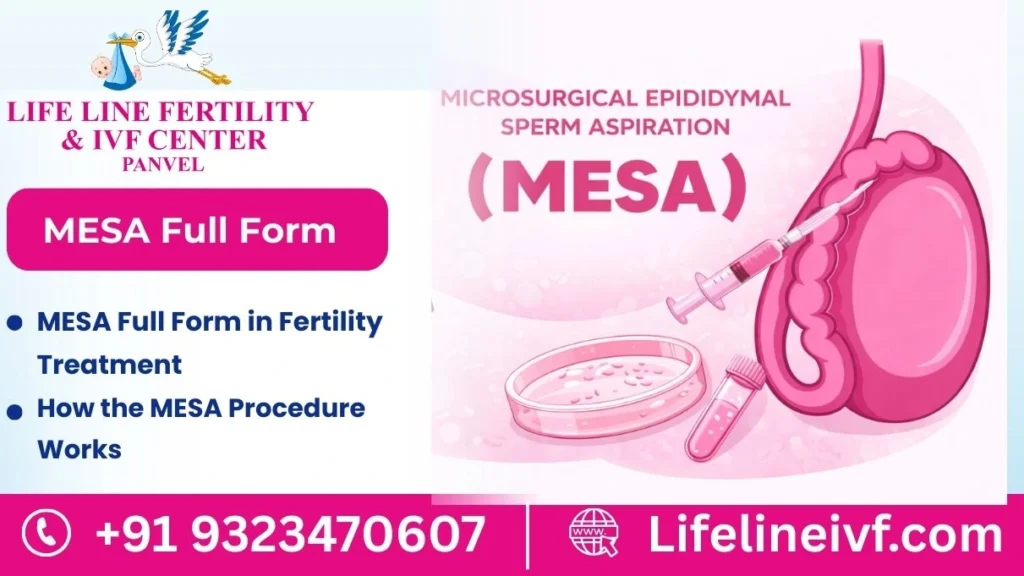
Blog MESA Full Form: Understanding Microsurgical Epididymal Sperm Aspiration in Fertility Treatment Many couples imagine having a child someday. For most people it happens naturally, but sometimes it doesn’t go as planned. Fertility problems are actually more common than people think, and in quite a few cases the issue may be related to sperm. Now, when sperm cannot come out naturally in semen, doctors may suggest special medical procedures to help retrieve sperm directly from the male reproductive system. One such procedure is called MESA. A lot of people search online for the MESA full form because the term sounds complicated at first. But once you understand what it means and how it works, it actually becomes much easier to grasp. The MESA full form is Microsurgical Epididymal Sperm Aspiration. It’s basically a medical procedure that helps doctors collect sperm directly from a small tube behind the testicles called the epididymis. This tube stores sperm after they are produced in the body. The sperm collected through the MESA procedure can then be used in fertility treatments like IVF or ICSI, which help fertilize the egg in a laboratory setting. For many couples facing male infertility, this procedure has helped make pregnancy possible. Understanding the MESA full form and its role in fertility treatment can really help couples feel more informed and a little less anxious when exploring their options. MESA Full Form in Fertility Treatment So first things first- the MESA full form stands for Microsurgical Epididymal Sperm Aspiration. It might sound like a big medical phrase, but the idea behind it is quite simple. The procedure allows doctors to collect sperm directly from the epididymis, which is a tiny tube located behind the testicles where sperm mature and are stored. In some men, sperm are produced normally in the testicles, but they cannot travel out through the reproductive tract. This usually happens because of a blockage or missing tubes that carry sperm. So even though the body is producing sperm, it never shows up in the semen. This is where the MESA procedure becomes useful. During the procedure, doctors use a microscope and very delicate surgical tools to carefully retrieve sperm from the epididymis. Once the sperm are collected, they can be used in assisted fertility treatments like IVF or ICSI. In many cases, these treatments help the sperm fertilize the egg and start embryo development. For couples dealing with male infertility, understanding the MESA full form and procedure can be an important step in exploring possible treatment options. Why Is the MESA Procedure Used in Fertility Treatments? The MESA procedure is usually recommended when sperm cannot be found in semen even though sperm production in the testicles is normal. Normally, sperm travel from the testicles through small tubes called the vas deferens and eventually leave the body during ejaculation. But if these tubes are blocked or missing, sperm cannot reach the semen. That means even though sperm are present in the body, they simply can’t get out naturally. In such situations, fertility specialists may use MESA as a sperm retrieval technique. By collecting sperm directly from the epididymis, doctors can still obtain healthy sperm for fertility treatments. These sperm are then commonly used in ICSI, where a single sperm is injected directly into an egg. This helps fertilization happen even if only a small number of sperm are available. For many couples, this approach opens up a chance of pregnancy that might otherwise not be possible. Who May Need the MESA Procedure? Not everyone experiencing infertility needs the MESA procedure. It is mainly recommended for certain types of male fertility problems. Obstructive Azoospermia One of the most common reasons for the MESA procedure is a condition called obstructive azoospermia. In this condition, the testicles produce sperm normally, but sperm cannot travel through the reproductive tract due to a blockage. This blockage might be caused by infection, injury, previous surgery, or sometimes a genetic condition. With MESA, doctors can bypass the blockage and retrieve sperm directly from the epididymis. Previous Vasectomy Some men have had a vasectomy earlier in life but later decide they want to have children. In cases where vasectomy reversal is not possible or successful, the MESA procedure may be used to retrieve sperm for IVF or ICSI treatment. Congenital Absence of the Vas Deferens In rare cases, some men are born without the tubes that carry sperm from the testicles. This condition is called congenital absence of the vas deferens. Even though sperm production is normal, sperm cannot leave the body naturally. MESA helps retrieve those sperm so they can be used in fertility treatments. When Do Doctors Recommend MESA? The MESA procedure is usually performed by experienced fertility specialists using microsurgical techniques. Step 1: Anesthesia The patient is usually given anesthesia so that the procedure is comfortable and pain-free. Step 2: Accessing the Epididymis Using a surgical microscope, the doctor carefully locates the epididymis, where mature sperm are stored. Step 3: Retrieving the Sperm A small amount of fluid containing sperm is gently collected from the epididymis. Struggling with Male Infertility or Failed IVF? Explore PICSI IVF for Better Success Book An Appointment Step 4: Lab Examination The collected fluid is then examined by embryologists in the fertility laboratory. The sperm are prepared so they can be used in IVF or ICSI treatments. How MESA Works With IVF and ICSI The MESA procedure itself does not directly lead to pregnancy. Instead, it provides sperm that can be used in assisted reproductive treatments. Most commonly, the retrieved sperm are used in ICSI, where a single sperm is injected into an egg. This method helps fertilization occur even when sperm numbers are low. After fertilization happens in the laboratory, the embryo begins to grow for a few days. Then doctors transfer the embryo into the uterus, hoping it will implant and develop into a pregnancy. Benefits of the MESA Procedure For many couples dealing with male infertility, the MESA procedure offers several advantages. Reliable Sperm