

PICSI Treatment: A More Advanced Way to Support IVF Success
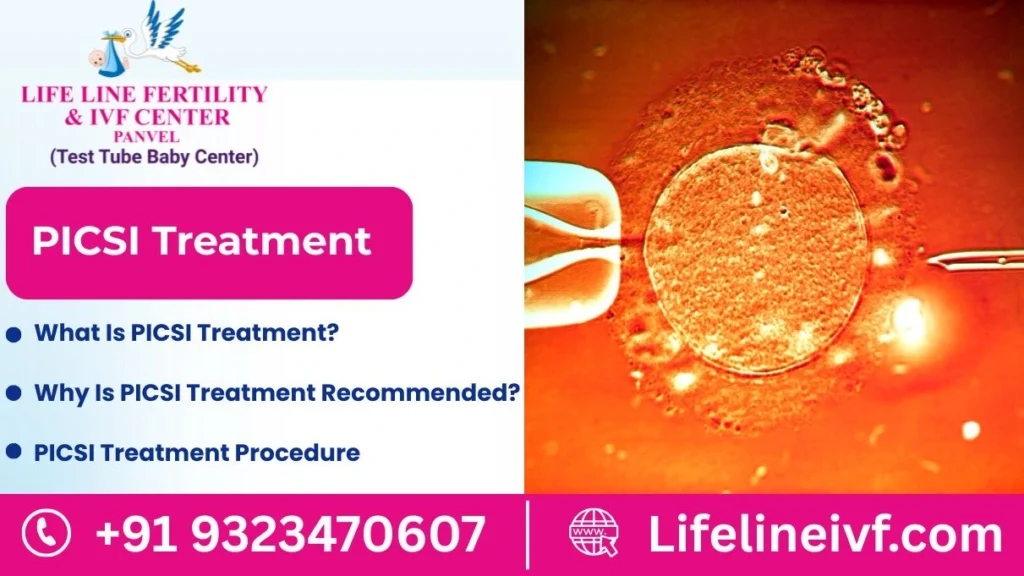
Blog PICSI Treatment: A More Advanced Way to Support IVF Success Fertility treatments have evolved a lot over the years, giving couples access to more precise and advanced options. Among these techniques, PICSI treatment is considered an important advancement in IVF because it focuses on selecting healthier and more mature sperm for fertilization. For couples struggling with repeated IVF failure, poor embryo quality, or male infertility issues, PICSI may offer an additional level of support during the IVF process. At Lifeline Fertility & IVF Center, modern fertility techniques are combined with personalized care to help couples move forward with confidence and hope. What Is PICSI Treatment? Fertility treatments have evolved a lot over the years, giving couples access to more precise and advanced options. Among these techniques, PICSI treatment is considered an important advancement in IVF because it focuses on selecting healthier and more mature sperm for fertilization. For couples struggling with repeated IVF failure, poor embryo quality, or male infertility issues, PICSI may offer an additional level of support during the IVF process. At Lifeline Fertility & IVF Center, modern fertility techniques are combined with personalized care to help couples move forward with confidence and hope. What Is PICSI Treatment? PICSI stands for Physiological Intracytoplasmic Sperm Injection. It is an advanced sperm selection technique used along with ICSI during IVF treatment. In this method, sperm are selected based on their ability to bind naturally with hyaluronan, a substance linked to sperm maturity and quality. Once the healthiest sperm are identified, they are injected directly into the egg using the ICSI process. The goal is to improve fertilization quality and support better embryo development. Why Is PICSI Treatment Recommended? PICSI treatment is usually suggested when sperm quality may be affecting IVF outcomes. It helps fertility specialists select mature sperm that may have a better chance of successful fertilization. This technique is often considered in cases of repeated IVF failure, recurrent miscarriage, poor embryo development, or male infertility concerns related to sperm health and DNA quality. PICSI Treatment Procedure PICSI treatment is carried out as a part of the IVF and ICSI cycle. The process mainly focuses on careful sperm selection before fertilization takes place. Wondering When an IVF Pregnancy Becomes Safe? Get expert guidance to understand important pregnancy milestones and ensure a healthier journey ahead. Book An Appointment Semen Sample Collection A semen sample is collected and processed in the laboratory to identify active and healthy sperm cells. Selection of Mature Sperm The sperm are placed in a specialized PICSI dish containing hyaluronan. Mature sperm naturally bind to this substance, helping embryologists choose healthier sperm for fertilization. Egg Retrieval Process Eggs are collected from the female partner through the standard IVF egg retrieval procedure. Fertilization Through ICSI The selected sperm is then injected directly into the egg using the ICSI technique to support fertilization. Embryo Monitoring and Transfer After fertilization, the embryos are observed carefully for growth and quality before the healthiest embryo is transferred into the uterus. Benefits of PICSI Treatment PICSI offers a more advanced sperm selection process compared to traditional ICSI alone. By selecting mature sperm, the technique may help improve embryo quality and fertilization outcomes in certain cases. It may also reduce the chances of selecting sperm with damaged DNA, which can be important for couples facing recurrent IVF failure or repeated pregnancy loss. Who Can Benefit from PICSI Treatment? PICSI treatment may be helpful for couples dealing with male infertility, poor sperm quality, failed IVF cycles, or unexplained fertility problems. The decision to use PICSI depends on individual fertility evaluations, medical history, and previous treatment outcomes. Fertility specialists carefully assess each case before recommending this approach. PICSI vs ICSI: What’s the Difference? PICSI and ICSI are closely related procedures, but the main difference lies in how sperm are selected. In standard ICSI, sperm are chosen mainly based on their appearance and movement under a microscope. In PICSI, sperm selection is based on biological maturity using hyaluronan binding. This extra step is intended to improve the quality of sperm used during fertilization. Why Choose Life Line Fertility & IVF Center? At Lifeline Fertility & IVF Center, every fertility journey is approached with care, transparency, and advanced medical support. The center focuses on combining modern reproductive technology with personalized treatment plans designed around each couple’s specific needs. From detailed fertility evaluations to advanced IVF procedures, the team works to provide compassionate care and evidence-based solutions that help improve treatment outcomes while ensuring patient comfort throughout the journey. Conclusion PICSI treatment is an advanced fertility technique that focuses on selecting healthier and more mature sperm during IVF treatment. In certain infertility cases, this approach may help support better fertilization and embryo development. At Lifeline Fertility & IVF Center, advanced reproductive care and personalized support come together to help couples move closer to their dream of parenthood. FAQ’s What is PICSI treatment mainly used for? PICSI treatment is used to select mature and healthy sperm during IVF to support better fertilization and embryo quality. Is PICSI treatment painful? No, PICSI is performed in the laboratory as part of the IVF process and does not cause additional pain to the patient. Can PICSI improve IVF success rates? PICSI may improve outcomes in selected cases, especially when sperm quality or repeated IVF failure is a concern. What makes PICSI different from ICSI? PICSI includes an additional sperm selection step based on sperm maturity, while ICSI mainly relies on visual selection. Who should consider PICSI treatment? Couples with male infertility issues, poor embryo quality, or multiple failed IVF attempts may benefit from PICSI treatment. PICSI treatment is used to select mature and healthy sperm during IVF to support better fertilization and embryo quality. No, PICSI is performed in the laboratory as part of the IVF process and does not cause additional pain to the patient. PICSI may improve outcomes in selected cases, especially when sperm quality or repeated IVF failure is a concern. PICSI includes an additional sperm selection step based